Skip to product information


Crimson Beauty Apple (Spring 2027)
$59.99
Reliable shipping
Flexible returns
Pollination
Needs a partner
Bloom group
2 of 7 (Early)
Ripening
Will it finish before your first hard freeze?
Check it on the Ripening Map (opens in a new tab)
Disease resistanceNo strong resistance
- 2 Apple scab : Susceptible, 2 of 5
- ? Cedar-apple rust : Unknown, no published data yet
- ? Fire blight : Unknown, no published data yet
- ? Powdery mildew : Unknown, no published data yet
Scored 1 to 5. Higher resists better, and ? means no published data yet.
See it on our apple disease chart (opens in a new tab)At a glance: Crimson Beauty Apple is an apple tree rated hardy to zone 3 in our ratings (winters to -40°F), not self-fertile, so it needs a different variety nearby as a pollenizer (bloom group 2 of 7, early for an apple or crabapple), and it ripens about Aug 9 to Aug 21 in Missoula (our Missoula estimate).
| Hardy to | Zone 3 to 7. A bare number means the whole of zone 3, colder half included (winters to -40°F). Find your zone with our cold hardiness calculator. |
|---|---|
| Chill hours | About 850 hours (650 to 1,050). Our estimate. No published figure exists for this variety yet. Montana winters give it plenty. In milder climates, make sure your winters average at least this much. Check your chill hours or see our sources. |
| Pollination | Needs Cross-Pollination. Bloom group 2 of 7 (early), late spring here. Plant a different apple or crabapple variety that blooms in groups 1 to 3. It has good pollen, so it can also pollenize other apples blooming at the same time. Good partners we carry: Dolgo Crabapple (Bundle of 2), Chestnut Applecrab, Lodi Apple, Martha Applecrab and 42 more. Apple Pollination Map. |
| Ripens | About Aug 9 to Aug 21 in Missoula (a Missoula estimate from published sources). Real years swing about a week either way. See the date for your town. |
| Rootstock and size | Bud 118: semi-dwarf in our dry Montana soils, semi-standard on paper, about 12 to 18 ft tall unpruned. Stands on its own, few suckers. Dolgo: full size, about 20 to 30 ft tall unpruned. Very hardy and well anchored. Our rootstock guide. |
| Good for | Pies and baking (6/10), sauce and butter (6/10), cooking and roasting (6/10). Scores are our own 1 to 10 ratings; 8 and up makes our Best Of lists. |
| Deer | A deer favorite. Fence it or cage it. |
| What you get | Bare root, 4-6 ft or 3-5 ft or 5-7 ft. Shipped or picked up in Missoula in spring, roots wrapped in moist sawdust. Guaranteed to bud out. |
Crimson Beauty: A Landmark in Apple Breeding History
Crimson Beauty holds a special place in the history of pomology as the first known controlled apple cross. In 1866, Francis Peabody Sharp crossed Fameuse (one of McIntosh’s parents) with New Brunswicker, an all-purpose apple valued for both fresh eating and baking. The result was Crimson Beauty—a summer apple traditionally labeled by nurseries as suitable only for culinary use, sauces, and processing.
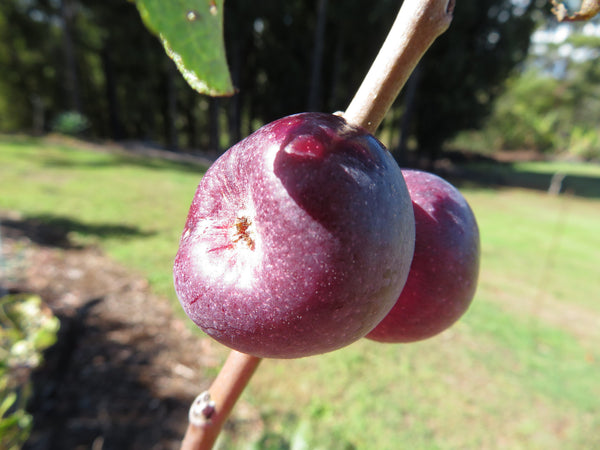
However, when we tasted it fresh off the tree at Benson’s Farm in Missoula on August 14, 2024, we were pleasantly surprised by its fresh eating quality. Interestingly, Bruce Benson had planned to remove the Crimson Beauty tree on his property to make room for a parking lot. After we explained the tree’s historical importance, he chose to keep it (see photo). The tree, planted by Bruce’s grandfather in 1947, remains the largest and oldest Crimson Beauty specimen we’ve seen in Montana.
Flavor Profile and Culinary Use
From our 2024 taste notes:
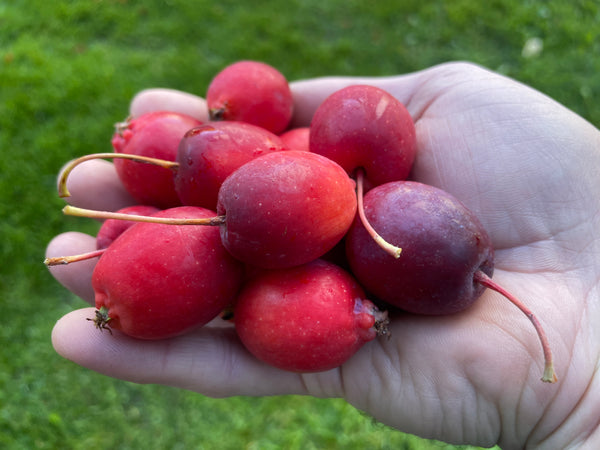
“Intense flavor—sweet at first, followed by tart—bursting with strawberry and other berry notes.”
Because it’s a summer apple, Crimson Beauty goes mealy quickly. For best results, we recommend harvesting slightly before full ripeness to extend its texture and shelf life. Picked at the right time, it can also be one of the earliest apples to use in pie.
Cold Hardiness
While we don’t yet know Crimson Beauty’s exact lower hardiness limit, it did survive the -33°F cold snap of 1957. Given that both Crimson Beauty and McIntosh are Fameuse seedlings, and McIntosh is reliably hardy to around -40°F, it’s reasonable to estimate that Crimson Beauty is hardy to somewhere between -35°F and -40°F.
Questions we get about Crimson Beauty Apple
Does Crimson Beauty Apple need a pollenizer?
Yes. Crimson Beauty Apple needs pollen from a different variety that blooms at about the same time. Plant a different apple or crabapple variety that blooms in groups 1 to 3. It has good pollen, so it can also pollenize other apples blooming at the same time. Partners we carry include Dolgo Crabapple (Bundle of 2), Chestnut Applecrab, Lodi Apple.
How cold hardy is Crimson Beauty Apple?
We rate Crimson Beauty Apple hardy to zone 3, which means winters down to about -40°F. Our ratings come from real winters at our two Montana sites and from trusted growers across the North, not from a catalog average.
How many chill hours does Crimson Beauty Apple need?
About 850 hours of winter chill (we count hours at or below 45°F), likely somewhere between 650 and 1,050. Nobody has published a chill figure for it, so that's our estimate from its relatives and origin. Likely needs a bit less chill than most apples, around 850 hours. Ripens mid-August. Our chill hours guide has a calculator for your winters, and our research page lists the sources.
When does Crimson Beauty Apple ripen?
About Aug 9 to Aug 21 in Missoula, Montana (an estimate built from published sources and our climate). Warmer places run earlier and cooler places later; our ripening map converts the date to your town.
How big does Crimson Beauty Apple get?
We graft Crimson Beauty Apple onto Bud 118 (semi-dwarf in our dry Montana soils, semi-standard on paper), which makes a tree roughly 12 to 18 ft tall if you never prune it. Some sizes are on Dolgo.
What is Crimson Beauty Apple good for?
Our top use scores for Crimson Beauty Apple are pies and baking (6/10), sauce and butter (6/10), cooking and roasting (6/10).
Is Crimson Beauty Apple disease resistant?
No. It's prone to apple scab. Nobody has published solid data on it for cedar-apple rust, fire blight and powdery mildew yet, so we list those as unknown. Our apple disease resistance chart has every rating, the notes and the sources.
Will deer eat Crimson Beauty Apple?
Yes, deer love it. Protect Crimson Beauty Apple with a fence or a cage, especially while it is young.
More Plants Like This
Pollination, Bloom & Ripening
Pollination partners
Trees that will pollenize Crimson Beauty Apple
Crimson Beauty Apple needs a different apple or crabapple nearby to set fruit. Every tree below blooms at the same time and has pollen that works for it. Plant partners within about 100 feet.
Bloom group
2 of 7 (Early)
Pollination
Needs a partner
Pollen
Good pollenizer
-
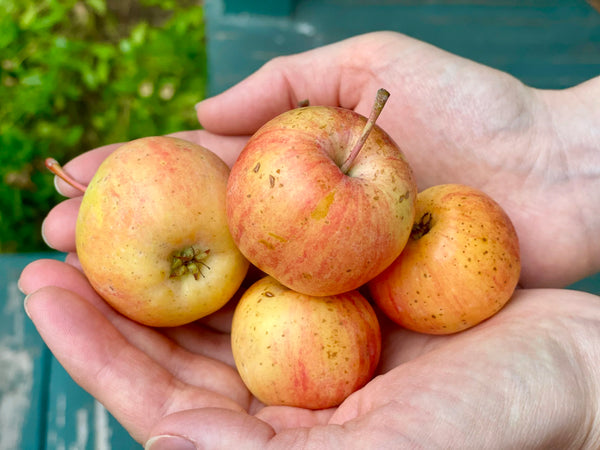 Chestnut Applecrab(Spring 2027)
From $59.99
-
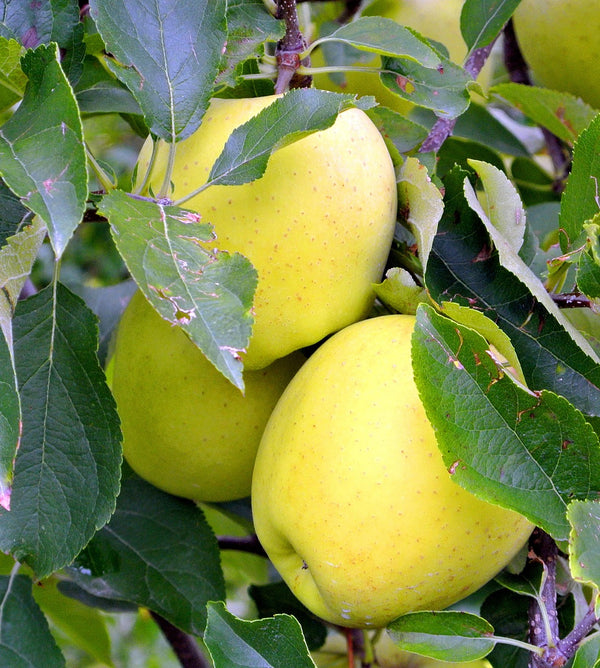 Lodi Apple(Spring 2027)
From $54.99
-
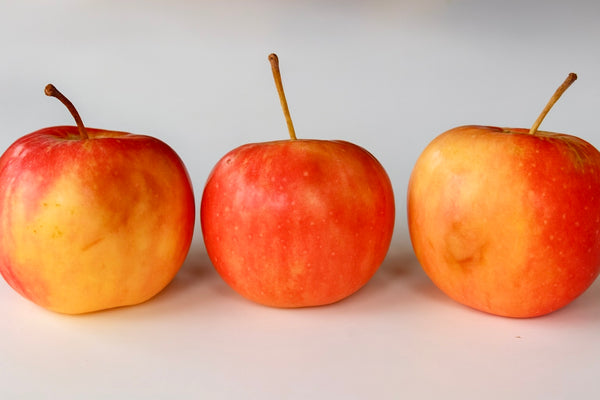 Martha Applecrab(Spring 2027)
From $44.99
-
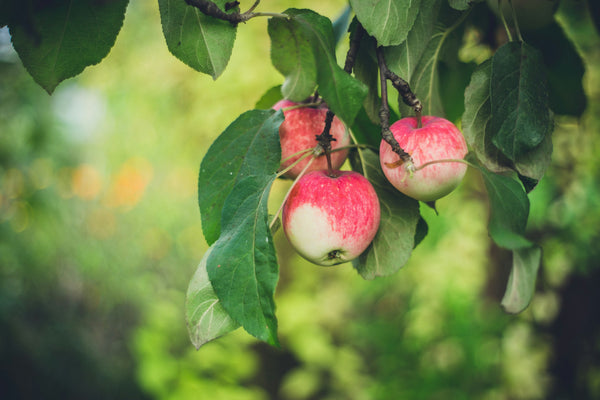 Norda Apple(Spring 2027)
From $54.99
-
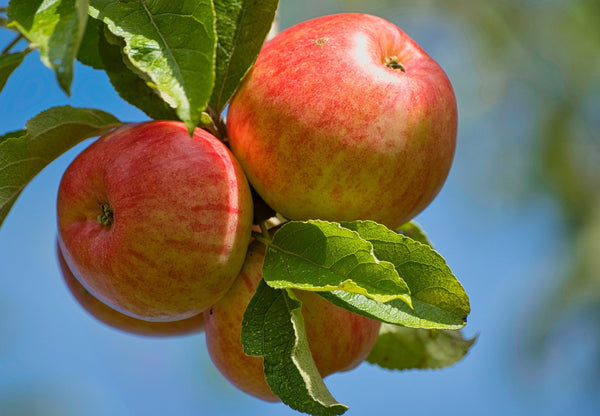 Norland Apple(Spring 2027)
From $49.99
-
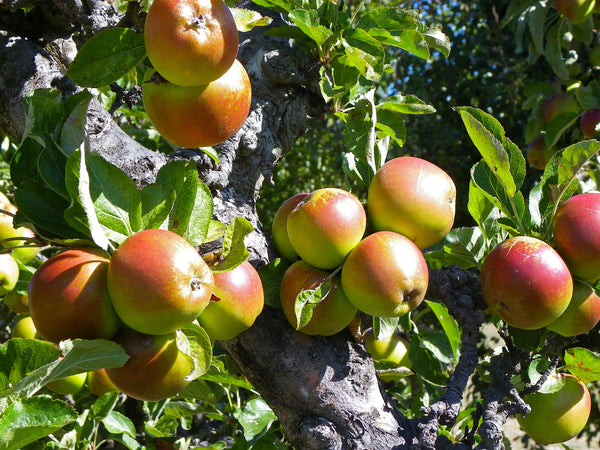 Red Baron Apple(Spring 2027)
$74.99
-
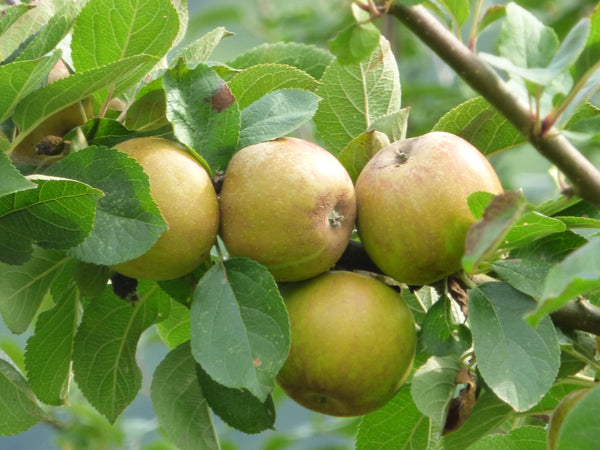 St. Edmund's Pippin Apple(Spring 2027)
From $44.99
-
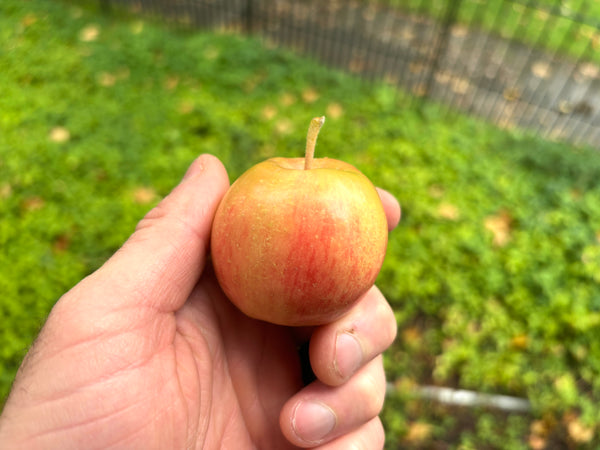 Hewe's Virginia Crabapple(Spring 2027)
From $74.99
-
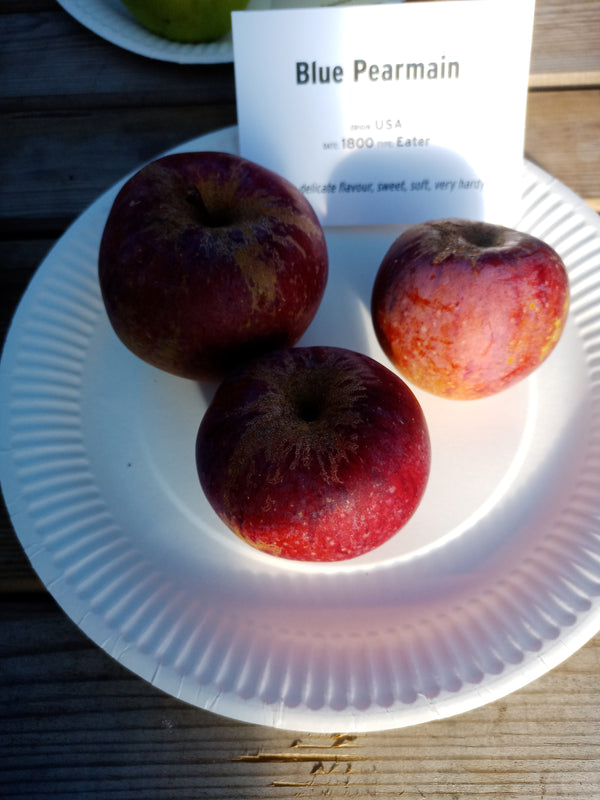 Blue Pearmain Apple(Spring 2027)
From $39.99