
Skip to product information


Purvis Hardy English Walnut (Bundle of 2)
$79.99
Reliable shipping
Flexible returns
Ripening
Will it finish before your first hard freeze?
Check it on the Ripening Map (opens in a new tab)At a glance: Purvis Hardy English Walnut is a walnut tree rated hardy to zone 4 in our ratings (winters to -30°F), and wind-pollinated with staggered male and female bloom, so plant two different trees.
| Hardy to | Zone 4 to 7. A bare number means the whole of zone 4, colder half included (winters to -30°F). Find your zone with our cold hardiness calculator. |
|---|---|
| Pollination | Heterodichogamous - Plant Two Different Trees. Bloom group 4 of 7 (mid), late spring to early summer here. English walnuts are wind-pollinated and not self-fertile in isolation because pollen and female flowers mature at different times on each tree, so plant all three seedlings together (a bundle of 3 very likely includes both flowering types). Good partners we carry: Purvis English Walnut Seedling (Bundle of 2), Ultra Northern English Walnut (Bundle of 2), Buartblack Walnut (Bundle of 2), Black Walnut (Bundle of 3). Bloom group is our estimate from the variety's origin and relatives. Walnut & Heartnut Pollination Chart. |
| Spacing | Plant 12 to 15 ft apart. |
| Good for | Pies and baking (7/10), edible nuts (7/10). Scores are our own 1 to 10 ratings; 8 and up makes our Best Of lists. |
| Deer | A deer favorite. Fence it or cage it. |
| What you get | Bare root, ±2 ft. Shipped or picked up in Missoula in spring, roots wrapped in moist sawdust. Guaranteed to bud out. |
Overview
Purvis Hardy English Walnut seedlings are seed-grown Juglans regia selections originating from Bob Purvis’ farm, chosen for its smooth-flavored nuts, good kernel quality, and demonstrated cold tolerance for an English walnut. These seedlings represent a rare cold-climate lineage and are well suited for growers who want to trial English walnuts beyond their typical comfort zone.
Origin & History
These seedlings come from nuts collected in Fall 2023 from a mature English walnut growing on the farm of our dear friend Bob Purvis. They represent a later-generation seedling population derived from Garfield Shults’ original English walnut seed line, which he promoted as cold-hardy “dwarf” Juglans regia—making these trees part of a multi-generational, open-pollinated selection adapted to colder climates.
While the mother tree does not express true dwarfing, it clearly shows reduced vigor compared to most standard English walnuts, topping out at roughly 12–14 feet tall. This makes the line especially interesting for cold-climate growers seeking more compact English walnut genetics.
Fruit & Uses
The mother tree produces smooth, mild-flavored nuts with a pleasant nutty profile and little to no bitterness. Kernel quality is strong, with a good meat-to-shell ratio. These traits make Purvis English Walnut promising for fresh eating, baking, and general culinary use. As with all seed-grown walnuts, some variation should be expected among offspring—but the parent tree sets a high bar for flavor and kernel quality.
Growth Habit
Based on the mother tree, this line exhibits noticeably lower vigor than most English walnuts. Rather than becoming a massive canopy tree, the parent has stabilized around 12–14 feet, suggesting a naturally smaller growth habit (though not genetically dwarf). Final size of seedlings will vary, but growers can reasonably expect moderate vigor compared to typical Juglans regia.
Spacing
Because these are seedling English walnuts with moderate vigor, a practical spacing recommendation is 12-15 feet between trees. If you plan to prune and manage canopy size, you can lean toward tighter spacing; if left largely unmanaged, give them more room to develop.
Pollination
English walnuts are wind-pollinated and generally benefit from having multiple trees for improved nut set due to timing differences between male and female flower maturity (dichogamy). Purvis English Walnut seedlings are not considered self-fertile in isolation; so planting the trees in this bundle together is strongly recommended to ensure reliable pollination and production.
Cold Hardiness
The mother tree has survived into the -20°F range on Bob Purvis’ farm with no reported winter injury. How far below -25°F this genetic line can tolerate is not yet known. For now, we'd place this Purvis Hardy English Walnut conservatively at USDA Zone 4b. As more growers trial these seedlings in colder climates, we’ll learn whether this line can reliably push beyond that threshold.
Other Notes
An especially interesting aspect of this walnut line is its combination of reduced vigor and clean, non-bitter flavor—two traits rarely found together in English walnuts grown this far north. As with all seed-grown walnuts, these are best viewed as a small breeding population: each tree is genetically unique, and part of the value here is discovering exceptional individuals for future cold-climate walnut improvement.
Questions we get about Purvis Hardy English Walnut
How cold hardy is Purvis Hardy English Walnut?
We rate Purvis Hardy English Walnut hardy to zone 4, which means winters down to about -30°F. Our ratings come from real winters at our two Montana sites and from trusted growers across the North, not from a catalog average.
What is Purvis Hardy English Walnut good for?
Our top use scores for Purvis Hardy English Walnut are pies and baking (7/10), edible nuts (7/10).
Will deer eat Purvis Hardy English Walnut?
Yes, deer love it. Protect Purvis Hardy English Walnut with a fence or a cage, especially while it is young.
What arrives, and when does Purvis Hardy English Walnut ship?
A dormant bare-root plant, roots wrapped in moist sawdust with a vapor barrier, shipped or picked up in Missoula in spring. Sizes offered: ±2 ft. We guarantee our plants bud out. Stone fruits can be slow, so if one still has not budded out by August 15, write to us and we credit you for the following spring.
Pollination partners
Trees that will pollenize Purvis Hardy English Walnut
English walnuts are wind-pollinated and not self-fertile in isolation because pollen and female flowers mature at different times on each tree, so plant all three seedlings together (a bundle of 3 very likely includes both flowering types).
Bloom group
4 of 7 (Mid)
Pollination
Plant two or more
Pollen
Good pollenizer
-
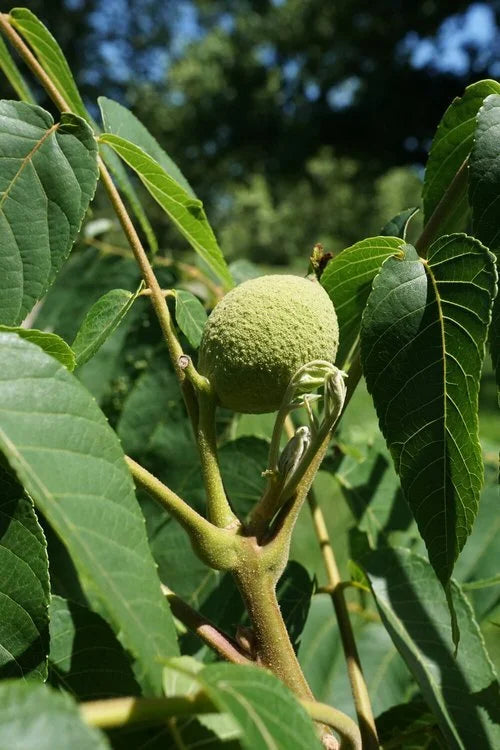 Black Walnut(Bundle of 3)
$99.99
Black Walnut(Bundle of 3)
$99.99
-
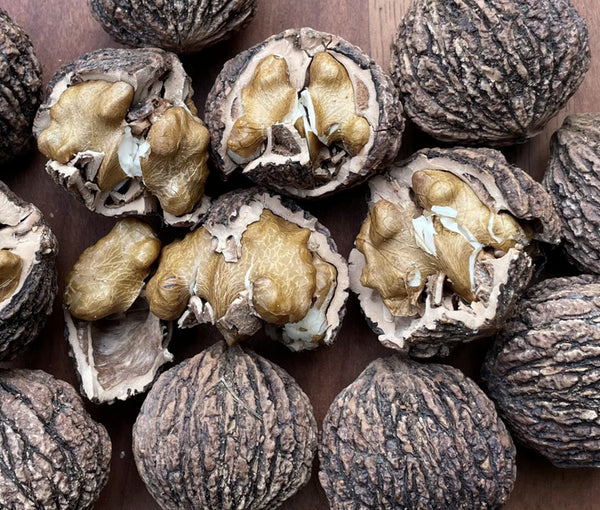 Sold out
Buartblack Walnut(Bundle of 2)
Sold out
Buartblack Walnut(Bundle of 2)
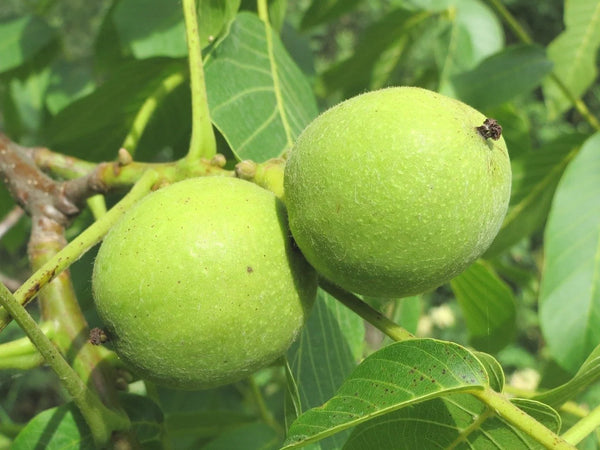
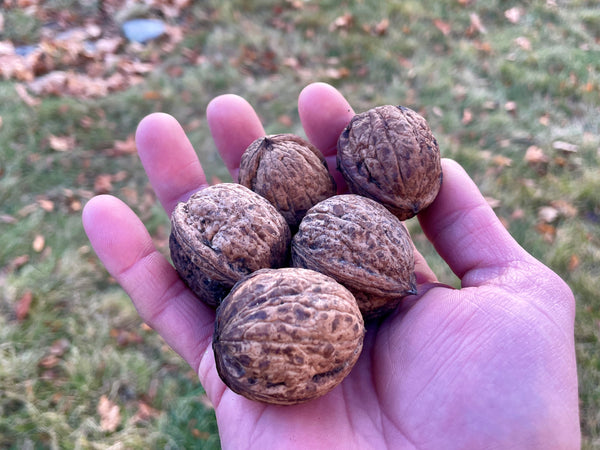
See every pairing on the Walnut & Heartnut Pollination Chart
Purvis Hardy English Walnut's bloom group is our best estimate. Watch it bloom and tell us what you see.