
Skip to product information


Sungold Apricot
$44.99
Reliable shipping
Flexible returns
Pollination
Needs a partner
Bloom group
4 of 7 (Mid)
Ripening
Will it finish before your first hard freeze?
Check it on the Ripening Map (opens in a new tab)
Disease resistanceNot tested yet
- ? Bacterial canker : Unknown, no published data yet
- ? Bacterial spot : Unknown, no published data yet
- ? Brown rot : Unknown, no published data yet
- ? Cytospora canker : Unknown, no published data yet
- ? Shot hole : Unknown, no published data yet
Scored 1 to 5. Higher resists better, and ? means no published data yet.
See it on our apricot disease chart (opens in a new tab)At a glance: Sungold Apricot is an apricot tree rated hardy to zone 3 in our ratings (winters to -40°F), and not self-fertile, so it needs a different variety nearby as a pollenizer (bloom group 4 of 7, mid for an apricot).
| Hardy to | Zone 3 to 7. A bare number means the whole of zone 3, colder half included (winters to -40°F). Find your zone with our cold hardiness calculator. |
|---|---|
| Chill hours | About 650 hours (450 to 850). Our estimate. No published figure exists for this variety yet. Montana winters give it plenty. In milder climates, make sure your winters average at least this much. Check your chill hours or see our sources. |
| Pollination | Needs Cross-Pollination. Bloom group 4 of 7 (mid), very early spring here. Sungold is not self-fertile. Plant another apricot that blooms around the same time, such as Debbie's Gold, Tomcot, Chinese or Wenatchee Moorpark. Good partners we carry: Debbie's Gold Apricot, Tomcot Apricot, Wenatchee Moorpark Apricot, Chinese Apricot and 7 more. Apricot Pollination Map. |
| Rootstock and size | Manchurian: full size, about 15 to 20 ft tall unpruned. The hardiest apricot root there is. Plant about 15 ft apart. Our rootstock guide. |
| Good for | Sauce and butter (7/10), jams and jellies (7/10), canning and freezing (6/10). Scores are our own 1 to 10 ratings; 8 and up makes our Best Of lists. |
| Deer | Sometimes damaged by deer. |
| What you get | Bare root, 2-4 ft or 4-5 ft. Shipped or picked up in Missoula in spring, roots wrapped in moist sawdust. Guaranteed to bud out. |
Overview
Sungold is a University of Minnesota apricot cultivar introduced in 1960. Although UMN only released one other apricot (Moongold), its genetic pedigree, which consists of some Siberian apricot, is still worthy of growing in places that see even -40F temps. Up there with some of the Prairie Province apricots (Westcot, Morden 604, Debbie's Gold, etc.) in terms of hardiness.
Origin & History
‘Sungold’ was developed at the University of Minnesota Fruit Breeding Farm as part of a cold-hardy apricot breeding program aimed at extending apricot production into northern climates. In UMN’s 1960 Bulletin, ‘Sungold’ is Minnesota No. 36, derived from a controlled cross of ‘Superb’ × ‘Manchu,’ and it was officially named in 1960.
That same UMN bulletin lists that the Manchu parent is described as Prunus sibirica (a Siberian apricot source) obtained via South Dakota State College from seed collected in Northern Manchuria by famed cold climate fruit breeder N.E. Hansen, although in this Journal of the American Pomological Society, they describe Manchu parent as a "seedling selection of a Manchurian species collected by N. E. Hansen" and do not list Siberian apricot.
That said, a 1961 article in the Journal of the American Pomological Society similarly describes the Manchu parent as “a seedling selection of a Manchurian species collected by N. E. Hansen." So whether Manchu is of Siberian or Manchurian apricot lineage we are unsure.
Fruit & Uses
The fruit is fair for fresh eating and good for preserves and sauces. The fact that it can survive more extreme temps makes it still a useful apricot in the cold climate orchard, although relative to other Prairie Province apricots, the fruit quality is not as good.
Growth Habit & Spacing
Sungold has an upright growth habit. Because it is grafted to full-size Manchurian apricot rootstock, Sungold should be planned as a standard-sized apricot tree over time, and spaced about 15 ft apart. If you want a larger canopy or more equipment/mowing room, plant wider; if you intend to manage size aggressively, you may plant closer with the expectation of more pruning.
Pollination
Not self-fertile and would require some of our other Prairie Province apricots, such as Westcot, Morden 604, Debbie's Gold, (among others) or Manchurian for pollination.
Cold hardiness
Sungold’s cold-climate reputation is tied to its University of Minnesota breeding background and long history in northern plantings. Sungold saw little to no winter injury when exposed to -35°F on Bruce Benson's farm in Missoula during the 1980's. That same mother tree, from which we collected cuttings to graft these trees, has been thriving ever since. It is at least hardy to -40F. Solid zone 3a apricot.
Questions we get about Sungold Apricot
Does Sungold Apricot need a pollenizer?
Yes. Sungold Apricot needs pollen from a different variety that blooms at about the same time. Sungold is not self-fertile. Plant another apricot that blooms around the same time, such as Debbie's Gold, Tomcot, Chinese or Wenatchee Moorpark. Partners we carry include Debbie's Gold Apricot, Tomcot Apricot, Wenatchee Moorpark Apricot.
How cold hardy is Sungold Apricot?
We rate Sungold Apricot hardy to zone 3, which means winters down to about -40°F. Our ratings come from real winters at our two Montana sites and from trusted growers across the North, not from a catalog average.
How many chill hours does Sungold Apricot need?
About 650 hours of winter chill (we count hours at or below 45°F), likely somewhere between 450 and 850. Nobody has published a chill figure for it, so that's our estimate from its relatives and origin. Chill won't limit it anywhere in Montana. It blooms in late April with Moongold, so give it a spot that warms slowly in spring. Our chill hours guide has a calculator for your winters, and our research page lists the sources.
How big does Sungold Apricot get?
We graft Sungold Apricot onto Manchurian (full size), which makes a tree roughly 15 to 20 ft tall if you never prune it. Plant about 15 ft apart.
What is Sungold Apricot good for?
Our top use scores for Sungold Apricot are sauce and butter (7/10), jams and jellies (7/10), canning and freezing (6/10).
Is Sungold Apricot disease resistant?
We don't know yet. Nobody has published solid disease data on Sungold Apricot for bacterial canker, bacterial spot, brown rot, cytospora canker and shot hole, so we list it as unknown instead of guessing. That doesn't mean it's weak. Plenty of the plants we grow have never been through formal disease trials. Our apricot disease resistance chart has every rating, the notes and the sources.
Will deer eat Sungold Apricot?
Sometimes. Deer browse Sungold Apricot now and then, so protect young plants where deer pressure is high.
What arrives, and when does Sungold Apricot ship?
A dormant bare-root plant, roots wrapped in moist sawdust with a vapor barrier, shipped or picked up in Missoula in spring. Sizes offered: 2-4 ft or 4-5 ft. We guarantee our plants bud out. Stone fruits can be slow, so if one still has not budded out by August 15, write to us and we credit you for the following spring.
More Plants Like This
Sold Out This Season? Try These
Pollination partners
Trees that will pollenize Sungold Apricot
Sungold Apricot needs a different apricot nearby to set fruit. Every tree below blooms at the same time and has pollen that works for it. Plant partners within about 100 feet.
Bloom group
4 of 7 (Mid)
Pollination
Needs a partner
Pollen
Good pollenizer
-
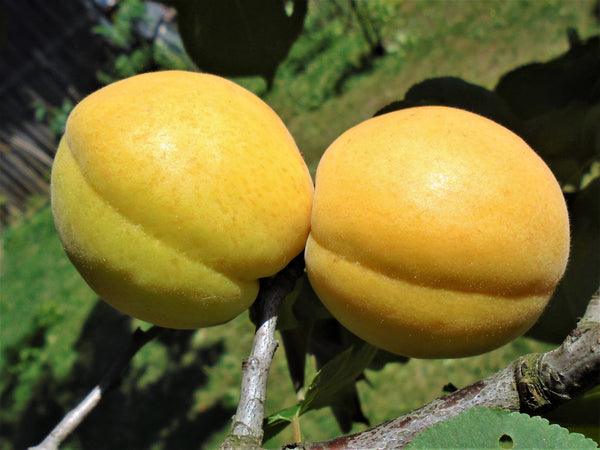 Debbie's Gold Apricot(Spring 2027)
From $54.99
-
 Tomcot Apricot(Spring 2027)
From $49.99
-
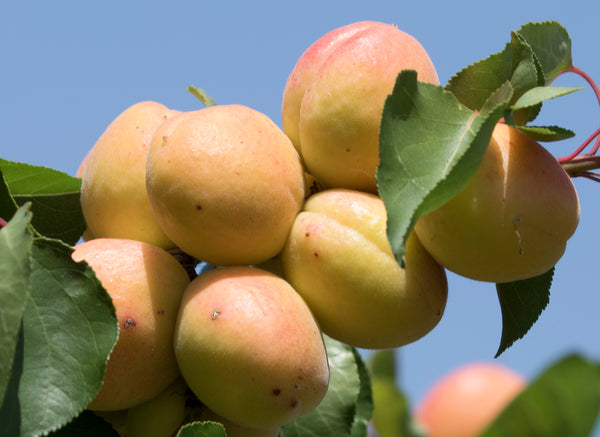 Corbett Apricot(Spring 2027)
From $69.99
-
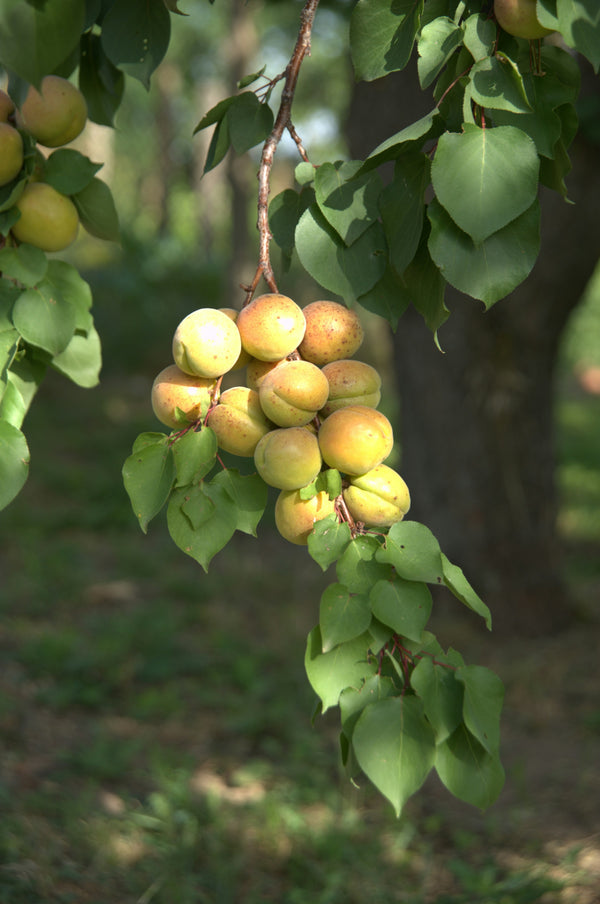 Alice Sharp Apricot(Spring 2027)
From $44.99

You may also like
Not available for spring 2027. Here's what we'd plant instead.
Sungold Apricot is off the list this season. These are in stock now, and the full apricot trees collection has the rest. Everything on our zone 3 page is rated for the same winters.
Browse the apricot trees collection for what's in stock.