
Skip to product information


Wayne Apricot (Spring 2027)
$49.99
Reliable shipping
Flexible returns
Pollination
Partly self-fertile
Bloom group
7 of 7 (Very Late)
Ripening
Will it finish before your first hard freeze?
Check it on the Ripening Map (opens in a new tab)
Disease resistanceNot tested yet
- ? Bacterial canker : Unknown, no published data yet
- ? Bacterial spot : Unknown, no published data yet
- ? Brown rot : Unknown, no published data yet
- ? Cytospora canker : Unknown, no published data yet
- ? Shot hole : Unknown, no published data yet
Scored 1 to 5. Higher resists better, and ? means no published data yet.
See it on our apricot disease chart (opens in a new tab)At a glance: Wayne Apricot is an apricot tree rated hardy to zone 3 in our ratings (winters to -40°F), and partially self-fertile, so a second variety nearby makes crops more dependable (bloom group 7 of 7, very late for an apricot).
| Hardy to | Zone 3 to 7. A bare number means the whole of zone 3, colder half included (winters to -40°F). Find your zone with our cold hardiness calculator. |
|---|---|
| Chill hours | About 750 hours (500 to 1,000). Our estimate. No published figure exists for this variety yet. Montana winters give it plenty. In milder climates, make sure your winters average at least this much. Check your chill hours or see our sources. |
| Pollination | Partially Self-Fertile. Bloom group 7 of 7 (very late), very early spring here. No source says whether Wayne crops alone, so plant another very late apricot, such as Zard, as a pollenizer. Nearby varieties that can boost the crop: Zard Apricot, Dr 606 Apricot, Precious Apricot, Zard Apricot Seedling (Bundle of 2). Apricot Pollination Map. |
| Rootstock and size | Manchurian: full size, about 15 to 20 ft tall unpruned. The hardiest apricot root there is. Our rootstock guide. |
| Good for | Fresh eating (6/10), jams and jellies (6/10). Scores are our own 1 to 10 ratings; 8 and up makes our Best Of lists. |
| Deer | Sometimes damaged by deer. |
| What you get | Bare root, 3-5 ft or 5-7 ft. Shipped or picked up in Missoula in spring, roots wrapped in moist sawdust. Guaranteed to bud out. |
The Best of the Manchurian Seedlings
Wayne was bred by Al Precht. He grew out scores of Manchurian apricot seedlings, and there was one whose flavor stood above all the rest. He named that one Wayne, after one of his Vietnam comrades. Wayne was the best of all of them. We got it from Purvis, and it's at least a zone 3 apricot.
Fruit
The apricots are roughly 1.5 inches in diameter and have good flavor. Unlike some Manchurian apricots, Wayne does not taste woody, which is the usual knock on the hardy Manchurian types.
Very Late Bloom
According to Purvis, Wayne blooms very late, so it often avoids spring frosts. With apricots up north, it's usually a frost at bloom, not winter cold, that costs you the crop. A late bloomer gets past more of those frosts than an early one does, and that's worth a lot here.
Wayne is new for us, so we'll add our own notes once our trees are fruiting.
About the photo: this isn’t Wayne itself. Photos of Wayne are either under copyright or simply unavailable, so we picked the open-source image that looks closest to the fruit. Photo: “Flora of Israel Apricot tree” by Yair Aronshtam, via Wikimedia Commons, licensed CC BY-SA 2.0, cropped.
Questions we get about Wayne Apricot
Does Wayne Apricot need a pollenizer?
It helps. Wayne Apricot is partially self-fertile, so it can set some fruit alone, but a second variety nearby makes crops more dependable. No source says whether Wayne crops alone, so plant another very late apricot, such as Zard, as a pollenizer. Partners we carry include Zard Apricot, Dr 606 Apricot, Precious Apricot.
How cold hardy is Wayne Apricot?
We rate Wayne Apricot hardy to zone 3, which means winters down to about -40°F. Our ratings come from real winters at our two Montana sites and from trusted growers across the North, not from a catalog average.
How many chill hours does Wayne Apricot need?
About 750 hours of winter chill (we count hours at or below 45°F), likely somewhere between 500 and 1,000. Nobody has published a chill figure for it, so that's our estimate from its relatives and origin. Montana winters cover its chill easily, and its later bloom gives it a better shot at missing spring frosts than early prairie apricots. Our chill hours guide has a calculator for your winters, and our research page lists the sources.
How big does Wayne Apricot get?
We graft Wayne Apricot onto Manchurian (full size), which makes a tree roughly 15 to 20 ft tall if you never prune it.
What is Wayne Apricot good for?
Our top use scores for Wayne Apricot are fresh eating (6/10), jams and jellies (6/10).
Is Wayne Apricot disease resistant?
We don't know yet. Nobody has published solid disease data on Wayne Apricot for bacterial canker, bacterial spot, brown rot, cytospora canker and shot hole, so we list it as unknown instead of guessing. That doesn't mean it's weak. Plenty of the plants we grow have never been through formal disease trials. Our apricot disease resistance chart has every rating, the notes and the sources.
Will deer eat Wayne Apricot?
Sometimes. Deer browse Wayne Apricot now and then, so protect young plants where deer pressure is high.
What arrives, and when does Wayne Apricot ship?
A dormant bare-root plant, roots wrapped in moist sawdust with a vapor barrier, shipped or picked up in Missoula in spring. Sizes offered: 3-5 ft or 5-7 ft. We guarantee our plants bud out. Stone fruits can be slow, so if one still has not budded out by August 15, write to us and we credit you for the following spring.
More Plants Like This
Pollination, Bloom & Ripening
Browse
Pollination partners
Partners for a bigger Wayne Apricot crop
Wayne Apricot sets some fruit on its own, but a lot more with a partner. Every tree below blooms at the same time and has pollen that works for it.
Bloom group
7 of 7 (Very Late)
Pollination
Partly self-fertile
Pollen
Good pollenizer
-
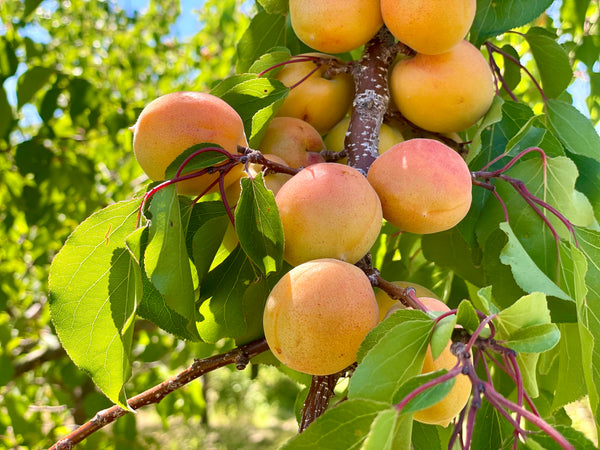 Zard Apricot Seedling(Bundle of 2) | Spring 2027
From $99.99
-
Sold out
Zard Apricot(Spring 2027)
-
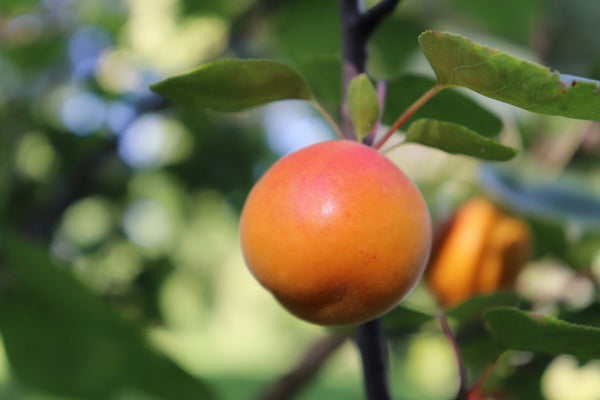 Sold out
Dr 606 Apricot(Spring 2027)
-
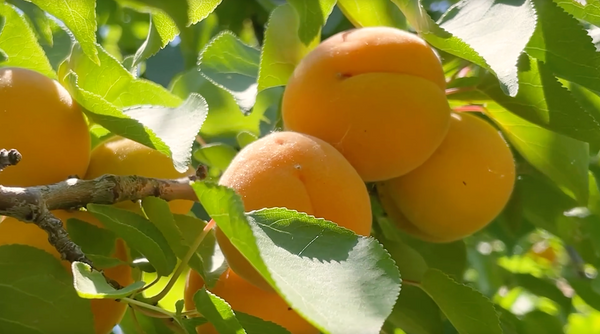 Sold out
Precious Apricot(Spring 2027)
