Skip to product information


Ellis Bitter Apple (Spring 2027)
$74.99
Reliable shipping
Flexible returns
Pollination
Needs a partner
Bloom group
7 of 7 (Very Late)
Ripening
Will it finish before your first hard freeze?
Check it on the Ripening Map (opens in a new tab)
Disease resistanceResists 1 of 4
- 2 Apple scab : Susceptible, 2 of 5
- ? Cedar-apple rust : Unknown, no published data yet
- 2 Fire blight : Susceptible, 2 of 5
- 4 Powdery mildew : Resistant, 4 of 5
Scored 1 to 5. Higher resists better, and ? means no published data yet.
See it on our apple disease chart (opens in a new tab)At a glance: Ellis Bitter Apple is an apple tree rated hardy to zone 4 from other growers' reports (winters to -30°F), not self-fertile, so it needs a different variety nearby as a pollenizer (bloom group 7 of 7, very late for an apple or crabapple), and it ripens about Sep 4 to Sep 21 in Missoula (our Missoula estimate).
| Hardy to | Zone 4 to 8. A bare number means the whole of zone 4, colder half included (winters to -30°F). Find your zone with our cold hardiness calculator. |
|---|---|
| Chill hours | About 1,000 hours (800 to 1,200). Our estimate. No published figure exists for this variety yet. Montana winters give it plenty. In milder climates, make sure your winters average at least this much. Check your chill hours or see our sources. |
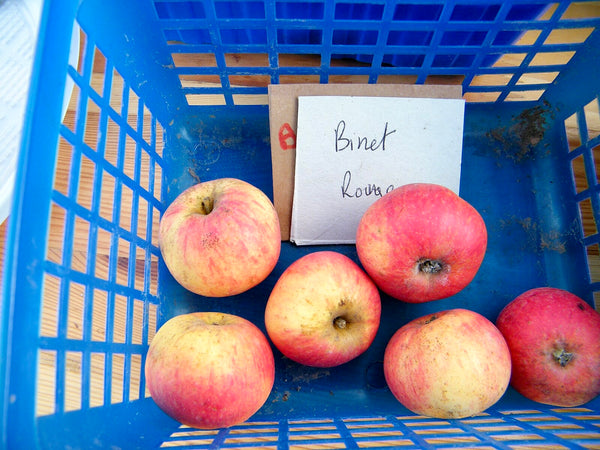
| Pollination | Needs Cross-Pollination. Bloom group 7 of 7 (very late), late spring here. Plant a different apple or crabapple variety that blooms in groups 6 to 7. It has good pollen, so it can also pollenize other apples blooming at the same time. Good partners we carry: Binet Rouge Apple, Brown Snout Apple. Apple Pollination Map. |
| Ripens | About Sep 4 to Sep 21 in Missoula (a Missoula estimate from published sources). Real years swing about a week either way. See the date for your town. |
| Rootstock and size | Bud 118: semi-dwarf in our dry Montana soils, semi-standard on paper, about 12 to 18 ft tall unpruned. Stands on its own, few suckers. Plant 15 to 18 ft apart. Our rootstock guide. |
| Good for | Hard cider (7/10). Scores are our 1 to 10 ratings, but we're still new to this one, so they lean on published descriptions and other growers rather than our own harvests. 8 and up makes our Best Of lists. |
| Deer | A deer favorite. Fence it or cage it. |
| What you get | Bare root, 4-6 ft. Shipped or picked up in Missoula in spring, roots wrapped in moist sawdust. Guaranteed to bud out. |
Overview
Ellis Bitter is a specialty cider apple grown primarily for fermentation rather than fresh eating. Most of what we know about its cider characteristics, growth behavior, and disease tendencies comes from university research programs and extension-based cider cultivar evaluations. This is the first year we have grown Ellis Bitter, and we have not yet tasted the fruit or observed its long-term behavior under Montana conditions, so the information below should be considered secondhand rather than experiential.
Fruit Quality & Uses
Ellis Bitter is valued for its role in cider making, where it contributes tannin, structure, and mouthfeel rather than sweetness or fresh-eating appeal. University cider research programs describe it as a bittering apple used to add depth and balance in fermented cider, particularly when blended with higher-acid or higher-sugar varieties.
Growth Habit & Spacing
Extension and research sources generally describe Ellis Bitter as a vigorous-growing apple. For Montana plantings, it should be treated as a vigorous tree and spaced accordingly. We have it on Bud-118 semi-dwarf rootstock, and should be spaced 15-18 ft. apart. Wider spacing helps maintain light penetration and airflow, which is especially important for cider apples grown for consistent ripening and disease management.
Pollination
Ellis Bitter is not considered self-fertile and benefits from cross-pollination with other apple varieties that bloom at a similar time. In Montana, reliable fruit set will depend on having compatible pollenizers nearby as well as adequate pollinator activity during bloom, particularly in cool or windy spring conditions.
Cold Hardiness
Cold hardiness information for Ellis Bitter is limited and best inferred from its classification as a European cider apple rather than an ultra-hardy northern dessert apple. For Montana, it should be approached conservatively and sited carefully, with attention to cold-air drainage, fall acclimation, and the use of cold-hardy rootstocks (we've got you covered here with Bud 118). It's likely hardy to -30F at least, although tread with caution if you are planting it in an area that can see colder temps than this. Its performance through extreme winter temperatures remains something that will need to be confirmed through local observation. Listed widely online as zone 4.
Disease Notes
University and extension references consistently note that Ellis Bitter shows susceptibility to fire blight. In Montana, this makes canopy management and vigor control especially important, as fire blight risk increases during warm bloom periods and rapid shoot growth.
Montana Context & Our Experience
Ellis Bitter is best considered a trial cider apple for Montana growers. While its cider qualities are well documented in research and extension literature, regional performance data in the Northern Rockies and Intermountain West are limited. This is our first year growing Ellis Bitter, and we have not yet tasted the fruit or observed how it handles Montana winters, disease pressure, or cropping patterns.
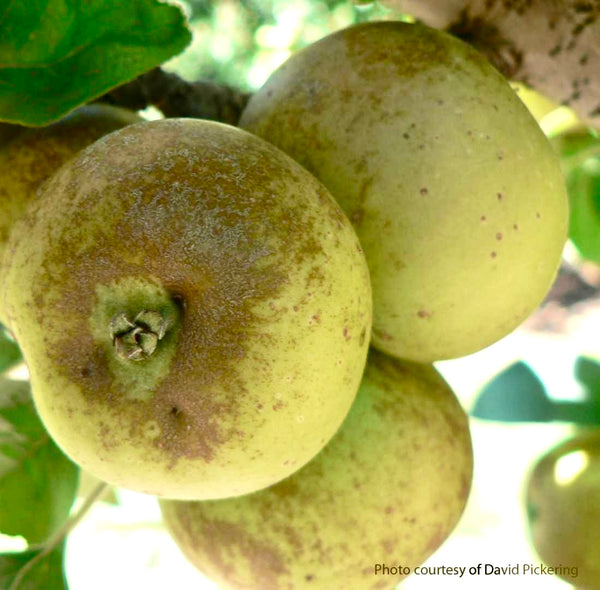
About the photo: this isn’t Ellis Bitter itself. Photos of Ellis Bitter are either under copyright or simply unavailable, so we picked the open-source image that looks closest to the fruit. Photo: “CSIRO ScienceImage 11106 Apples on tree” by Liese Coulter, CSIRO, via Wikimedia Commons, licensed CC BY 3.0.
Questions we get about Ellis Bitter Apple
Does Ellis Bitter Apple need a pollenizer?
Yes. Ellis Bitter Apple needs pollen from a different variety that blooms at about the same time. Plant a different apple or crabapple variety that blooms in groups 6 to 7. It has good pollen, so it can also pollenize other apples blooming at the same time. Partners we carry include Binet Rouge Apple, Brown Snout Apple.
How cold hardy is Ellis Bitter Apple?
We list Ellis Bitter Apple at zone 4, which means winters down to about -30°F. We're still new to it, so that rating comes from published sources and other growers' reports rather than our own winters. We'll adjust it as our own trees go through more Montana winters.
How many chill hours does Ellis Bitter Apple need?
About 1,000 hours of winter chill (we count hours at or below 45°F), likely somewhere between 800 and 1,200. Nobody has published a chill figure for it, so that's our estimate from its relatives and origin. Late bloomer, so pair it with another late-blooming apple. No measured chill figure; plan on about 1,000 hours. Our chill hours guide has a calculator for your winters, and our research page lists the sources.
When does Ellis Bitter Apple ripen?
About Sep 4 to Sep 21 in Missoula, Montana (an estimate built from published sources and our climate). Warmer places run earlier and cooler places later; our ripening map converts the date to your town.
How big does Ellis Bitter Apple get?
We graft Ellis Bitter Apple onto Bud 118 (semi-dwarf in our dry Montana soils, semi-standard on paper), which makes a tree roughly 12 to 18 ft tall if you never prune it. Plant 15 to 18 ft apart.
What is Ellis Bitter Apple good for?
Our top use scores for Ellis Bitter Apple are hard cider (7/10). We haven't tasted the fruit yet, so that score leans on published descriptions and other growers rather than our own harvests.
Is Ellis Bitter Apple disease resistant?
For some diseases, yes. It's resistant to powdery mildew. It's prone to apple scab and fire blight. Nobody has published solid data on it for cedar-apple rust yet, so we list that as unknown. Our apple disease resistance chart has every rating, the notes and the sources.
Will deer eat Ellis Bitter Apple?
Yes, deer love it. Protect Ellis Bitter Apple with a fence or a cage, especially while it is young.
More Plants Like This
By Zone
Best For
Pollination, Bloom & Ripening
Disease Resistance
Browse
Pollination partners
Trees that will pollenize Ellis Bitter Apple
Ellis Bitter Apple needs a different apple or crabapple nearby to set fruit. Every tree below blooms at the same time and has pollen that works for it. Plant partners within about 100 feet.
Bloom group
7 of 7 (Very Late)
Pollination
Needs a partner
Pollen
Good pollenizer