Skip to product information


Romeo Dwarf Cherry (Bundle of 2) | Spring 2027
$99.99
Reliable shipping
Flexible returns
Pollination
Self-fertile
Bloom group
4 of 7 (Mid)
Ripening
Will it finish before your first hard freeze?
Check it on the Ripening Map (opens in a new tab)
Disease resistanceNo strong resistance
- ? Bacterial canker : Unknown, no published data yet
- ? Black knot : Unknown, no published data yet
- 2 Brown rot : Susceptible, 2 of 5
- 2 Cherry leaf spot : Susceptible, 2 of 5
- ? Cytospora canker : Unknown, no published data yet
Scored 1 to 5. Higher resists better, and ? means no published data yet.
See it on our cherry disease chart (opens in a new tab)At a glance: Romeo Dwarf Cherry is a cherry tree rated hardy to zone 2 in our ratings (winters to -50°F), self-fertile, so one tree can crop (bloom group 4 of 7, mid for a dwarf sour cherry), and it ripens about Jul 27 to Aug 4 in Missoula (our Missoula estimate).
| Also called | Dwarf sour cherry, bush cherry, Romance series cherry (Prunus cerasus x Prunus fruticosa) |
|---|---|
| Hardy to | Zone 2 to 7. A bare number means the whole of zone 2, colder half included (winters to -50°F). Find your zone with our cold hardiness calculator. |
| Chill hours | About 800 hours (600 to 1,200). Our estimate. No published figure exists for this variety yet. Montana winters give it plenty. In milder climates, make sure your winters average at least this much. Check your chill hours or see our sources. |
| Pollination | Self-Fertile. Bloom group 4 of 7 (mid), mid spring here. Romeo is self-fertile, so one plant will crop on its own. It blooms with Juliet, Cutie Pie and Wowza!, and planting a mix can still help yields. Nearby varieties that can boost the crop: Cutie Pie Dwarf Cherry (Bundle of 2), Juliet Dwarf Cherry (Bundle of 2), Wowza! Dwarf Cherry (Bundle of 2). Tart Cherry Pollination Map. |
| Ripens | About Jul 27 to Aug 4 in Missoula (a Missoula estimate from published sources). Real years swing about a week either way. See the date for your town. |
| Spacing | Plant 5 to 7 ft apart. |
| Good for | Juice and sweet cider (9/10), fresh eating (8/10), sauce and butter (8/10), pies and baking (7/10), jams and jellies (7/10), wine (7/10). Scores are our own 1 to 10 ratings; 8 and up makes our Best Of lists. |
| Deer | A deer favorite. Fence it or cage it. |
| Compare it | Romeo vs Juliet, side by side on hardiness, pollination, ripening and fruit. |
| Where it came from | Read about the University of Saskatchewan fruit program and what else came out of it. |
| What you get | Bare root, 3-5 ft. Shipped or picked up in Missoula in spring, roots wrapped in moist sawdust. Guaranteed to bud out. |
Overview
Romeo is a Romance Series dwarf sour cherry from the University of Saskatchewan, bred for extreme cold hardiness and high-quality, dark fruit on a compact, shrub-form plant.
Origin and History
Romeo was officially released in 2004 as part of the University of Saskatchewan’s Romance Series of dwarf sour cherries. (usask)
These Romance Series cherries are interspecific hybrids derived from Prunus cerasus (sour cherry) and Prunus fruticosa (dwarf/cherry steppe types), commonly referred to as Prunus × kerrasis in cold-climate literature.
Fruit & Uses
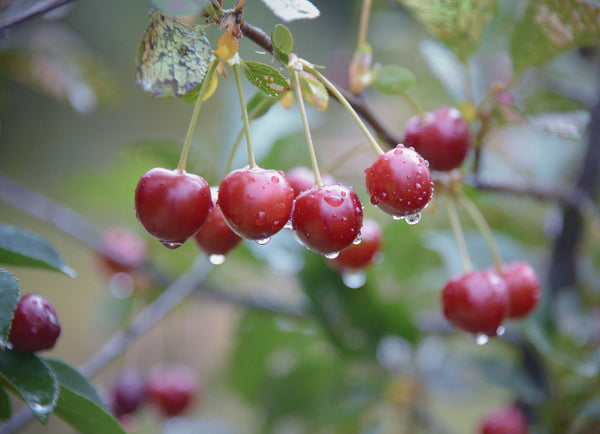
Romeo produces deep red fruit that can ripen very dark and is slightly sweeter than some other bush cherry types. Good for fresh eating and can be used in pies, jellies, and pressed for juice. Never dried them but I'm sure they would be good.
They have relatively high soluble solids and are sweeter than most pie cherries, although do not listen to what some places say online which claim these are sweet cherries. They are not. They are sweeter for a tart cherry but they are still very much have a good deal of acidity. That said, children tend to love them fresh, which says a lot.
Growth Habit & Spacing
Romeo is grown as a compact shrub-form plant (not a standard cherry tree), and cold-climate guidance warns that training these as a single-trunk “tree form” can reduce hardiness in very cold settings (this has not been a problem here in Western MT, although people in colder parts of Eastern MT should take note of this).
For spacing, University of Saskatchewan gardening guidance recommends dwarf sour cherries be spaced about 5–7 feet apart.
Pollination
Romeo (like the other Romance Series bush cherries) is self-fertile, but fruit set can increase when you plant a second compatible bush cherry type nearby. Any of our other dwarf cherries we offer can cross with Romeo.
Cold Hardiness
Romeo is repeatedly positioned in research/extension material as a Zone 2–class hardy, and it should be able withstand near -50F temps. Good for the vast majority of growers in MT.
Questions we get about Romeo Dwarf Cherry
Does Romeo Dwarf Cherry need a pollenizer?
No. Romeo Dwarf Cherry is self-fertile, so a single tree can set fruit. Romeo is self-fertile, so one plant will crop on its own. It blooms with Juliet, Cutie Pie and Wowza!, and planting a mix can still help yields. Partners we carry include Cutie Pie Dwarf Cherry (Bundle of 2), Juliet Dwarf Cherry (Bundle of 2), Wowza! Dwarf Cherry (Bundle of 2).
How cold hardy is Romeo Dwarf Cherry?
We rate Romeo Dwarf Cherry hardy to zone 2, which means winters down to about -50°F. Our ratings come from real winters at our two Montana sites and from trusted growers across the North, not from a catalog average.
How many chill hours does Romeo Dwarf Cherry need?
About 800 hours of winter chill (we count hours at or below 45°F), likely somewhere between 600 and 1,200. Nobody has published a chill figure for it, so that's our estimate from its relatives and origin. Bred on the Canadian prairies, so Montana's winters give it all the chill it wants. No measured figure exists yet. Our chill hours guide has a calculator for your winters, and our research page lists the sources.
When does Romeo Dwarf Cherry ripen?
About Jul 27 to Aug 4 in Missoula, Montana (an estimate built from published sources and our climate). Warmer places run earlier and cooler places later; our ripening map converts the date to your town.
What is Romeo Dwarf Cherry good for?
Our top use scores for Romeo Dwarf Cherry are juice and sweet cider (9/10), fresh eating (8/10), sauce and butter (8/10), pies and baking (7/10). Anything scored 8 or higher makes our Best Of lists.
Is Romeo Dwarf Cherry disease resistant?
No. It's prone to brown rot and cherry leaf spot. Nobody has published solid data on it for bacterial canker, black knot and cytospora canker yet, so we list those as unknown. Our cherry disease resistance chart has every rating, the notes and the sources.
Will deer eat Romeo Dwarf Cherry?
Yes, deer love it. Protect Romeo Dwarf Cherry with a fence or a cage, especially while it is young.
What arrives, and when does Romeo Dwarf Cherry ship?
A dormant bare-root plant, roots wrapped in moist sawdust with a vapor barrier, shipped or picked up in Missoula in spring. Sizes offered: 3-5 ft. We guarantee our plants bud out. Stone fruits can be slow, so if one still has not budded out by August 15, write to us and we credit you for the following spring.
Juice data
| SG (Brix) | Acid g/L | Tannin g/L | pH |
|---|---|---|---|
| 1.109 (25.7) M | 18.1 M | 1.2 E | 3.21 M |
Fruit grown in Corvallis, MT. Letters show how solid each number is: M measured, P published but weaker, E our estimate.
MSU juice: 25.7 Brix, 17.3 g/L as citric, pH 3.21.
Sources: MSU Western Agricultural Research Center, sour cherry juice and wine trials
Run Romeo Dwarf Cherry through the hard cider calculator to see what it does in a blend.
More Plants Like This
By Zone
Best For
Pollination, Bloom & Ripening
Pollination partners
Good partners for Romeo Dwarf Cherry
Romeo Dwarf Cherry is self-fertile, so one tree will fruit on its own. If you'd like a second dwarf sour cherry, these bloom at the same time and work well together.
Bloom group
4 of 7 (Mid)
Pollination
Self-fertile
Pollen
Good pollenizer
-
 Sold out
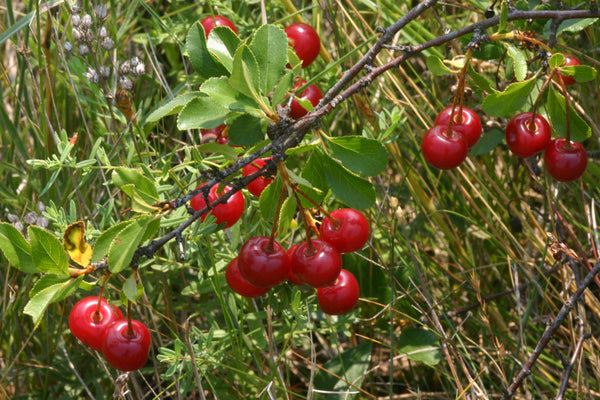
Cutie Pie Dwarf Cherry(Bundle of 2)
-
 Sold out
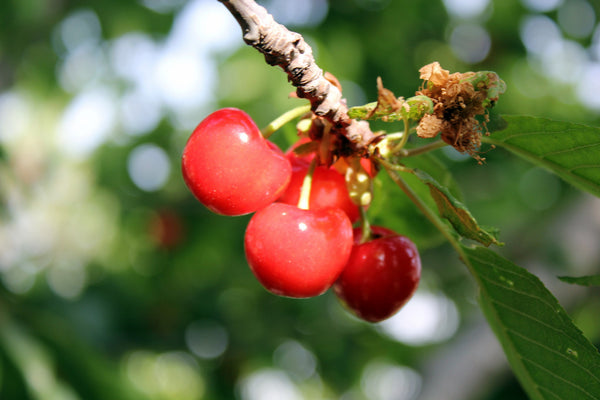
Wowza! Dwarf Cherry(Bundle of 2)