
Skip to product information


Red King Red Flesh Apple
$59.99
Reliable shipping
Flexible returns
Pollination
Needs a partner
Bloom group
3 of 7 (Early-Mid)
Ripening
Will it finish before your first hard freeze?
Check it on the Ripening Map (opens in a new tab)
Disease resistanceNo strong resistance
- ? Apple scab : Unknown, no published data yet
- ? Cedar-apple rust : Unknown, no published data yet
- 1 Fire blight : Highly susceptible, 1 of 5
- ? Powdery mildew : Unknown, no published data yet
Scored 1 to 5. Higher resists better, and ? means no published data yet.
See it on our apple disease chart (opens in a new tab)At a glance: Red King Red Flesh Apple is an apple tree rated hardy to zone 4 in our ratings (winters to -30°F), and not self-fertile, so it needs a different variety nearby as a pollenizer (bloom group 3 of 7, early-mid for an apple or crabapple).
| Hardy to | Zone 4 to 8. A bare number means the whole of zone 4, colder half included (winters to -30°F). Our notes have it taking -40°F. We're listing it conservatively until we have more data. Find your zone with our cold hardiness calculator. |
|---|---|
| Chill hours | About 1,000 hours (700 to 1,200). Our estimate. No published figure exists for this variety yet. Montana winters give it plenty. In milder climates, make sure your winters average at least this much. Check your chill hours or see our sources. |
| Pollination | Needs Cross-Pollination. Bloom group 3 of 7 (early-mid), late spring here. Not self-fertile. Plant a different apple or crabapple variety nearby that blooms at about the same time (bloom groups 2 to 4 on our chart). Good partners we carry: Hewe's Virginia Crabapple, Hyslop Crabapple, Wickson Crabapple, Blue Pearmain Apple and 100 more. Bloom group is our estimate from the variety's origin and relatives. Apple Pollination Map. |
| Rootstock and size | M7: semi-dwarf, about 11 to 16 ft tall unpruned. Leans and suckers, so stake it. Our rootstock guide. |
| Good for | Ornamental value (7/10), sauce and butter (7/10), juice and sweet cider (7/10), fresh eating (6/10), pies and baking (6/10), canning and freezing (6/10). Scores are our own 1 to 10 ratings; 8 and up makes our Best Of lists. |
| Deer | A deer favorite. Fence it or cage it. |
| What you get | Bare root, 5+ ft. Regular Grade. Shipped or picked up in Missoula in spring, roots wrapped in moist sawdust. Guaranteed to bud out. |
Overview
This is one of the newest red-fleshed apples we’ve added to our lineup, and although detailed info is still limited, it’s already made a visual and flavor impression.
Origins & Parentage
Red King Red Flesh is a bred seedling out of central Michigan. Van Well Nursery in Wenatchee, Washington introduced it and sells it exclusively, with a patent pending. The exact parentage hasn't been published. It's presumed to be a seedling of Malus niedzwetzkyana, the wild red-fleshed apple native to Central Asia (Kyrgyzstan, Kazakhstan and neighboring countries), and growers report Red Delicious in its background. The result is a highly ornamental, red-fleshed apple.
Don't confuse it with Red King Delicious, an early-coloring sport of Starking Red Delicious that E. Barclay Brauns found at Riverside, Washington, and that Van Well sold back in the 1950s under Plant Patent 1411. That one's a regular white-fleshed Delicious. A few nurseries have mixed up the two histories, which is where the "1950s, Riverside, Washington" origin you may see elsewhere comes from.
Flavor & Texture
-
Flavor: Sweet, with berry-like notes; some sources report it leans tart but remains pleasant and well-balanced, likely thanks to its Red Delicious heritage (but with none of that cardboard texture!)
-
Texture: Not super crisp, but still enjoyable for fresh eating and desserts
-
Storage: Stores well, several months in the right conditions
Aside from its eye-catching red flesh, the blossoms are a vivid red, much like its presumed Malus niedzwetzkyana parent. When it flowered in 2024, we removed the blooms to help the tree focus on growth, but the floral show alone makes this variety a standout in the landscape.
Climate Suitability
-
Hardy to Zone 4 (-30°F) until we get more data
-
Tolerates -35°F to possibly -40°F
-
Not recommended for growers in areas that experience colder than -40°F, such as eastern Montana or interior Alaska.
We’re offering several grades on the same rootstock:
-
Trees are grafted onto M7 semi-dwarf rootstock, which is cold hardy to about -40°F, so select accordingly based on your climate.
Questions we get about Red King Red Flesh Apple
Does Red King Red Flesh Apple need a pollenizer?
Yes. Red King Red Flesh Apple needs pollen from a different variety that blooms at about the same time. Not self-fertile. Plant a different apple or crabapple variety nearby that blooms at about the same time (bloom groups 2 to 4 on our chart). Partners we carry include Hewe's Virginia Crabapple, Hyslop Crabapple, Wickson Crabapple.
How cold hardy is Red King Red Flesh Apple?
We rate Red King Red Flesh Apple hardy to zone 4, which means winters down to about -30°F. Our notes have it taking -40°F. We're listing it conservatively until we have more data. Our ratings come from real winters at our two Montana sites and from trusted growers across the North, not from a catalog average.
How many chill hours does Red King Red Flesh Apple need?
About 1,000 hours of winter chill (we count hours at or below 45°F), likely somewhere between 700 and 1,200. Nobody has published a chill figure for it, so that's our estimate from its relatives and origin. Our chill hours guide has a calculator for your winters, and our research page lists the sources.
How big does Red King Red Flesh Apple get?
We graft Red King Red Flesh Apple onto M7 (semi-dwarf), which makes a tree roughly 11 to 16 ft tall if you never prune it.
What is Red King Red Flesh Apple good for?
Our top use scores for Red King Red Flesh Apple are ornamental value (7/10), sauce and butter (7/10), juice and sweet cider (7/10), fresh eating (6/10).
Is Red King Red Flesh Apple disease resistant?
No. It's very prone to fire blight. Nobody has published solid data on it for apple scab, cedar-apple rust and powdery mildew yet, so we list those as unknown. Our apple disease resistance chart has every rating, the notes and the sources.
Will deer eat Red King Red Flesh Apple?
Yes, deer love it. Protect Red King Red Flesh Apple with a fence or a cage, especially while it is young.
What arrives, and when does Red King Red Flesh Apple ship?
A dormant bare-root plant, roots wrapped in moist sawdust with a vapor barrier, shipped or picked up in Missoula in spring. Sizes offered: 5+ ft. Regular Grade. We guarantee our plants bud out. Stone fruits can be slow, so if one still has not budded out by August 15, write to us and we credit you for the following spring.
More Plants Like This
Sold Out This Season? Try These
Pollination partners
Trees that will pollenize Red King Red Flesh Apple
Red King Red Flesh Apple needs a different apple or crabapple nearby to set fruit. Every tree below blooms at the same time and has pollen that works for it. Plant partners within about 100 feet.
Bloom group
3 of 7 (Early-Mid)
Pollination
Needs a partner
Pollen
Not tested yet
-
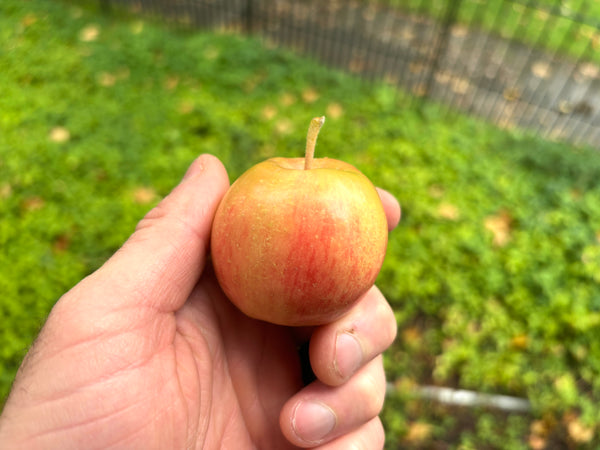 Hewe's Virginia Crabapple(Spring 2027)
From $74.99
-
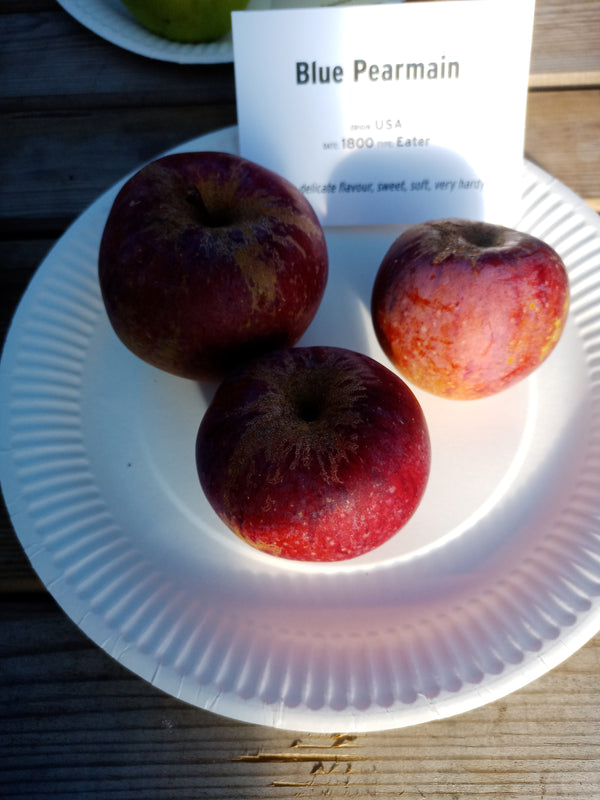 Blue Pearmain Apple(Spring 2027)
From $39.99
-
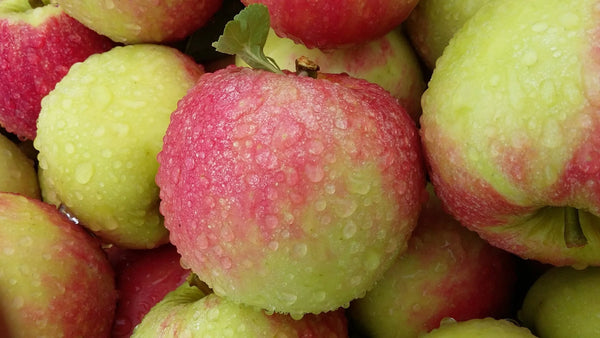 Carroll Apple(Spring 2027)
From $49.99
-
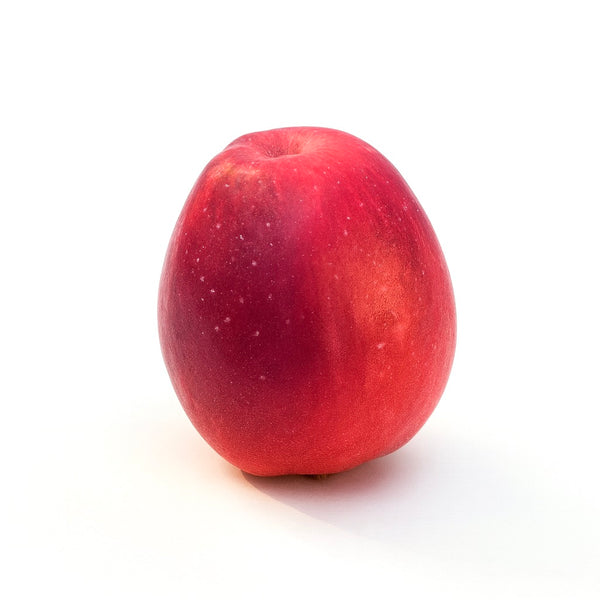 Centennial Applecrab(Spring 2027)
From $59.99
-
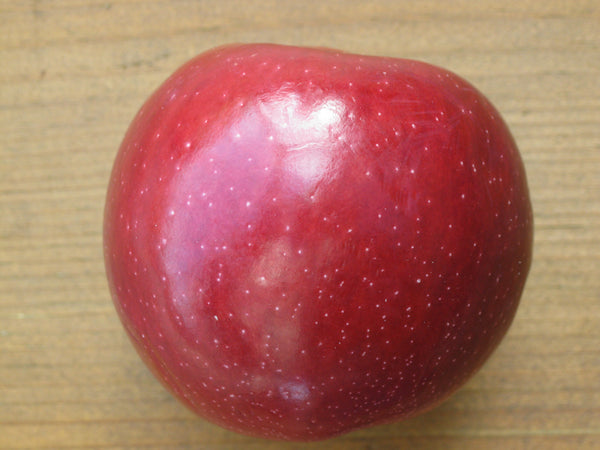 Empire Apple(Spring 2027)
From $34.99
-
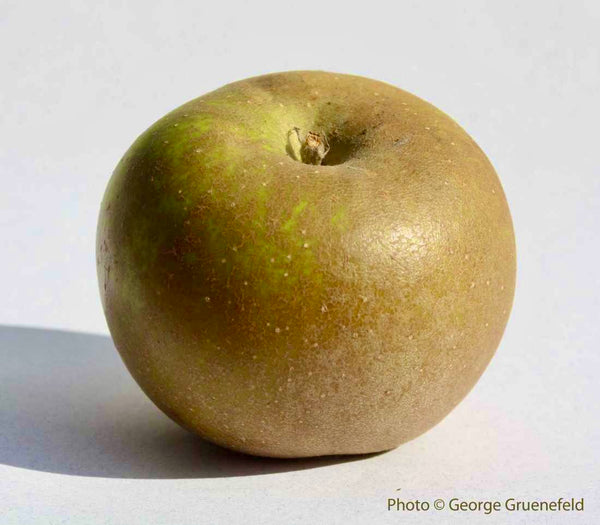 Golden Russet Apple(Spring 2027)
From $44.99
-
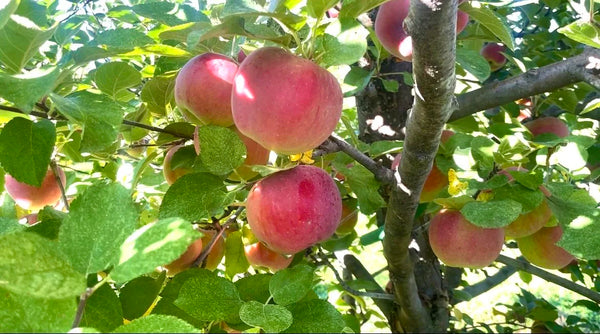 Liberty Apple(Spring 2027)
From $49.99
-
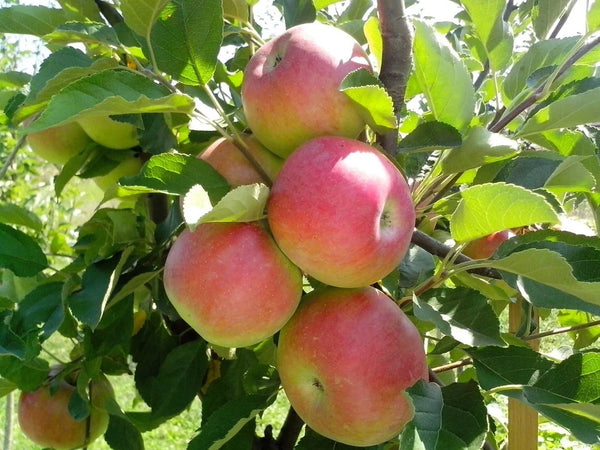 Parkland Apple(Spring 2027)
$74.99
-
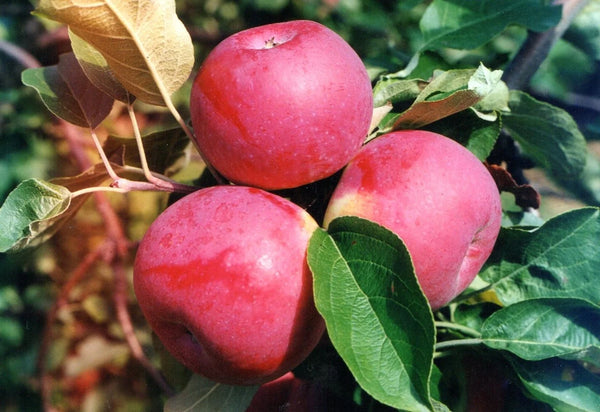 Paula Red Apple(Spring 2027)
From $59.99
See every pairing on the Apple Pollination Map
Red King Red Flesh Apple's bloom group is our best estimate. Watch it bloom and tell us what you see.
You may also like
Not available for spring 2027. Here's what we'd plant instead.
Red King Red Flesh Apple is off the list this season. These are in stock now, and the full apple trees collection has the rest. Everything on our zone 4 page is rated for the same winters.
Browse the apple trees collection for what's in stock.