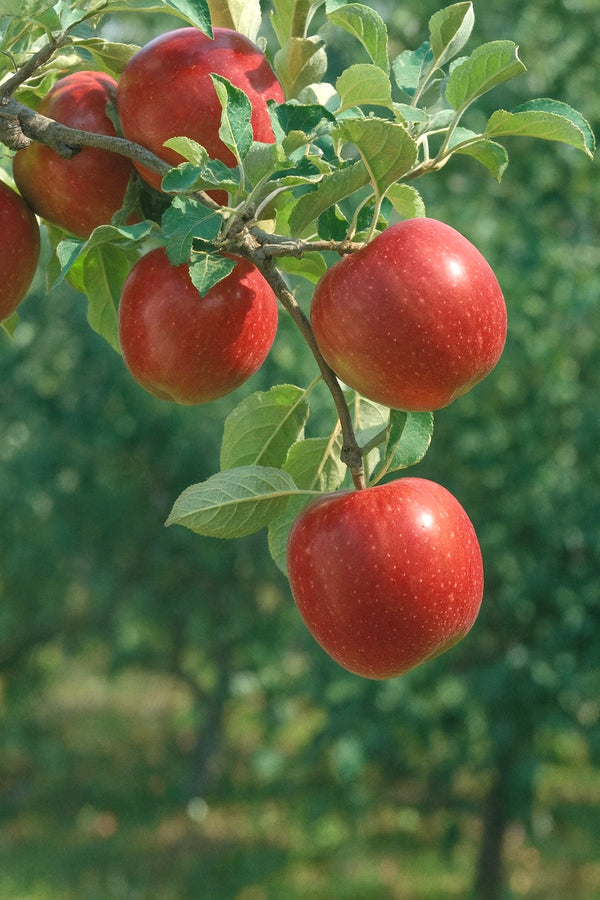
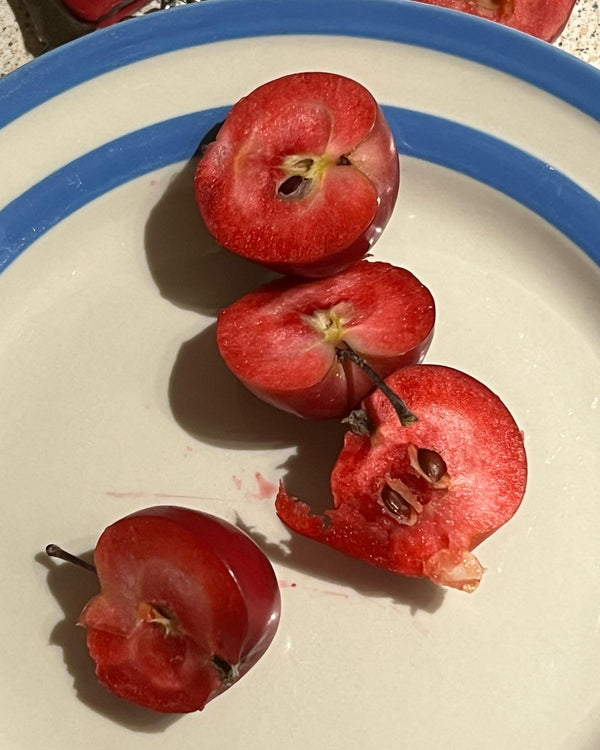
Skip to product information


Roxbury Russet Apple (Spring 2027)
$89.99
Reliable shipping
Flexible returns
Pollination
Needs a partnerTriploid
Bloom group
5 of 7 (Mid-Late)
Ripening
Will it finish before your first hard freeze?
Check it on the Ripening Map (opens in a new tab)
Disease resistanceResists 1 of 4
- 2 Apple scab : Susceptible, 2 of 5
- 2 Cedar-apple rust : Susceptible, 2 of 5
- 4 Fire blight : Resistant, 4 of 5
- 2 Powdery mildew : Susceptible, 2 of 5
Scored 1 to 5. Higher resists better, and ? means no published data yet.
See it on our apple disease chart (opens in a new tab)At a glance: Roxbury Russet Apple is an apple tree rated hardy to zone 4 in our ratings (winters to -30°F), and not self-fertile, so it needs a different variety nearby as a pollenizer (bloom group 5 of 7, mid-late for an apple or crabapple).
| Hardy to | Zone 4 to 8. A bare number means the whole of zone 4, colder half included (winters to -30°F). Find your zone with our cold hardiness calculator. |
|---|---|
| Chill hours | About 1,000 hours (800 to 1,200). From published figures. Montana winters give it plenty. In milder climates, make sure your winters average at least this much. Check your chill hours or see our sources. |
| Pollination | Needs Cross-Pollination. Bloom group 5 of 7 (mid-late), late spring here. This is a triploid, so its pollen is poor and it can't pollenize other trees. Plant two different apple or crabapple varieties with good pollen that bloom in groups 4 to 6. Good partners we carry: Black Oxford Apple, Honeycrisp Apple, Northern Spy Apple, Oriole Apple and 71 more. Apple Pollination Map. |
| Rootstock and size | Dolgo: full size, about 20 to 30 ft tall unpruned. Very hardy and well anchored. Our rootstock guide. |
| Good for | Winter storage (9/10), hard cider (8/10), fresh eating (7/10), juice and sweet cider (7/10), cooking and roasting (6/10), pies and baking (6/10). Scores are our own 1 to 10 ratings; 8 and up makes our Best Of lists. |
| Deer | A deer favorite. Fence it or cage it. |
| What you get | Bare root, 5-7 ft. Shipped or picked up in Missoula in spring, roots wrapped in moist sawdust. Guaranteed to bud out. |
About Roxbury Russet Apple
Roxbury Russet is widely called the oldest named apple in North America (grown in Massachusetts by the mid 1600s), with SG 1.061 juice and 6.1 g/L acid.
- Where it came from: Roxbury, Massachusetts, grown there by the mid 1600s (from our own research).
- Parents: Unknown.
- Also called: Roxbury.
- Cider class: Sharp.
- Juice: SG 1.061, 15.9 Brix, 6.1 g/L acid as malic, 0.08% tannin, pH 3.50 (WSU).
- Winter: Rated zone 4 (to -30F) until we see more. Some growers report it taking colder, but we haven't confirmed that.
- Bloom and ripening: blooms in apple group 5 of 7 (mid-late); ripens mid season apple.
Part of: sharp cider apples, zone 4 cider apples.
More reading: best apples for cider.
Questions about Roxbury Russet Apple
Is Roxbury Russet good for cider? Yes. WSU measured SG 1.061 and 6.1 g/L acid, and it's a quarter of our New England strong blend.
Does Roxbury Russet need a pollenizer? It needs two. It's a triploid, so plant two other apples that bloom with it (group 5).
How big does Roxbury Russet Apple get? On Dolgo roots it's full size, about 20 to 30 ft unpruned.
Sources: WSU Mount Vernon cider cultivar database.
Overview
Note: This is a new variety for us, so the information below is based on historical pomological sources and grower reports rather than our own long-term, first-hand experience.
Roxbury Russet is widely regarded as the oldest named apple cultivar in North America, long valued for its durability, storability, and distinctive russeted fruit.
Origin and History
Roxbury Russet originated in Massachusetts and is documented in cultivation by the mid-1600s, making it a foundational apple of early colonial orchards. It was grown extensively throughout New England for centuries, not because it was flashy or early, but because it reliably produced fruit that could be stored and eaten deep into winter. Its longevity in American orchards speaks to both its resilience and its practical value in a pre-refrigeration world.
Fruit & Uses
The fruit is medium-sized with heavy, rough russeting over greenish-gold skin. Flesh is firm, dense, and mildly sweet with a nutty, earthy, almost pear-like flavor that develops and improves noticeably after storage. Roxbury Russet has historically been prized as a winter keeper, excelling for fresh eating after a period of storage, as well as for baking and cider. It is not typically an apple meant for immediate eating at harvest, but rather one that rewards patience.
Growth Habit & Spacing
Trees are typically vigorous, long-lived, and spreading, especially on standard rootstocks. Like many very old cultivars, Roxbury Russet can be slower to come into bearing compared to modern apples, but it compensates with durability and longevity. Spacing on Dolgo rootstock (what we currently offer) is in the 18-20 ft. range. Tighter spacing could be applied for a more intensive pruning regiment.
Pollination
Roxbury Russet is not self-fertile and requires a compatible apple pollenizer with overlapping bloom. As a diploid apple, it both requires and provides viable pollen and fits well into mixed plantings with other mid-season blooming apples. Examples of what could cross with Roxbury Russet includes the following: 9-22 End, Alexander, Arkansas Black, Ashmead’s Kernel, Blue Pearmain, Brown Snout, Cortland, Crimson Beauty, Empire, Freedom, Frostbite, KinderKrisp, McIntosh, MN 1628, Northern Spy, Paula Red, Pristine, Spartan, Chestnut, Centennial, Martha, Rescue, Trailman
Cold Hardiness
Commonly reported as a zone 4 apple, there are anecdotal online claims of survival to colder temperatures, sometimes as low as the -40°F range, but we have not confirmed this. For now, until we have more experience with it, we are listing it as hardy to -30F, and therefore for Montana growers, should just be grown in the warmest valleys of western MT. These are: Blackfoot, Bitterroot, Clark Fork, Flathead, Jocko, Lower Kootenai, Mission, Missoula, and Upper Flathead / North Fork. For Eastern MT, could possibly work in Billings and the surrounding warmer microclimates.
Questions we get about Roxbury Russet Apple
Does Roxbury Russet Apple need a pollenizer?
Yes. Roxbury Russet Apple needs pollen from a different variety that blooms at about the same time. This is a triploid, so its pollen is poor and it can't pollenize other trees. Plant two different apple or crabapple varieties with good pollen that bloom in groups 4 to 6. Partners we carry include Black Oxford Apple, Honeycrisp Apple, Northern Spy Apple.
How cold hardy is Roxbury Russet Apple?
We rate Roxbury Russet Apple hardy to zone 4, which means winters down to about -30°F. Our ratings come from real winters at our two Montana sites and from trusted growers across the North, not from a catalog average.
How many chill hours does Roxbury Russet Apple need?
About 1,000 hours of winter chill (we count hours at or below 45°F), likely somewhere between 800 and 1,200. That comes from published figures for this variety. Our chill hours guide has a calculator for your winters, and our research page lists the sources.
How big does Roxbury Russet Apple get?
We graft Roxbury Russet Apple onto Dolgo (full size), which makes a tree roughly 20 to 30 ft tall if you never prune it.
What is Roxbury Russet Apple good for?
Our top use scores for Roxbury Russet Apple are winter storage (9/10), hard cider (8/10), fresh eating (7/10), juice and sweet cider (7/10). Anything scored 8 or higher makes our Best Of lists.
Is Roxbury Russet Apple disease resistant?
For some diseases, yes. It's resistant to fire blight. It's prone to apple scab, cedar-apple rust and powdery mildew. Our apple disease resistance chart has every rating, the notes and the sources.
Will deer eat Roxbury Russet Apple?
Yes, deer love it. Protect Roxbury Russet Apple with a fence or a cage, especially while it is young.
What arrives, and when does Roxbury Russet Apple ship?
A dormant bare root plant, roots wrapped in moist sawdust with a vapor barrier, shipped or picked up in Missoula in spring. Sizes offered: 5-7 ft. We guarantee our plants bud out. Stone fruits can be slow, so if one still has not budded out by August 15, write to us and we credit you for the following spring.
Juice data
| SG (Brix) | Acid g/L | Tannin g/L | pH |
|---|---|---|---|
| 1.061 (15.0) M | 6.1 M | 0.8 M | 3.5 M |
On these numbers it's a sharp on the Long Ashton scale. Fruit grown in coastal Washington. Letters show how solid each number is: M measured, P published but weaker, E our estimate.
WSU: SG 1.061, 6.1 g/L, tannin 0.08%, pH 3.50. Geneva NY found 9.6 g/L.
Sources: WSU Mount Vernon Cider Cultivar Performance Database, 2002 to 2017 means
Run Roxbury Russet Apple through the hard cider calculator to see what it does in a blend.
More Plants Like This
By Zone
Best For
Pollination, Bloom & Ripening
Browse
Pollination partners
Trees that will pollenize Roxbury Russet Apple
Roxbury Russet Apple needs a different apple or crabapple nearby to set fruit. Every tree below blooms at the same time and has pollen that works for it. Plant partners within about 100 feet.
Roxbury Russet Apple is a triploid. Its pollen is poor, so it can't pollenize these back. Plant two of them so every tree in the planting gets pollenized.
Bloom group
5 of 7 (Mid-Late)
Pollination
Needs a partner
Pollen
Poor (triploid)
-
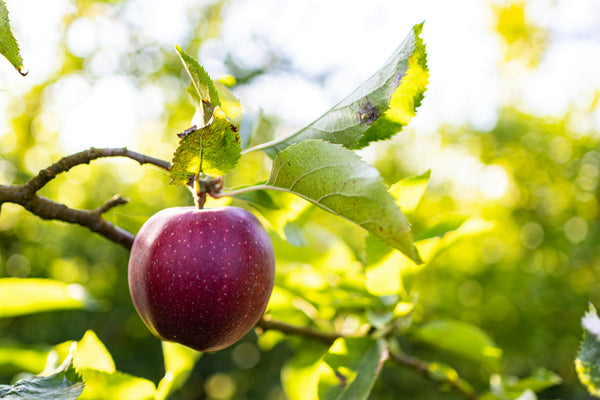 Black Oxford Apple(Spring 2027)
From $44.99
-
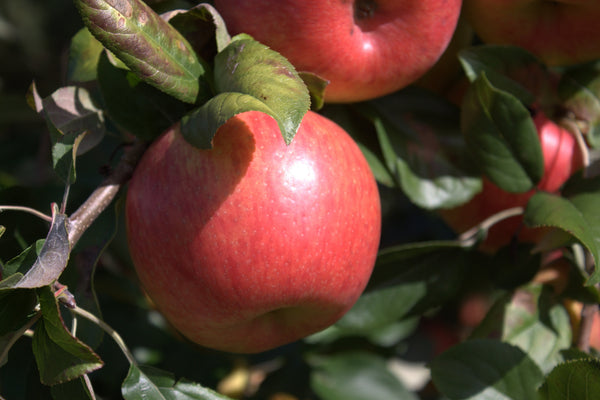 Honeycrisp Apple(Spring 2027)
From $59.99
-
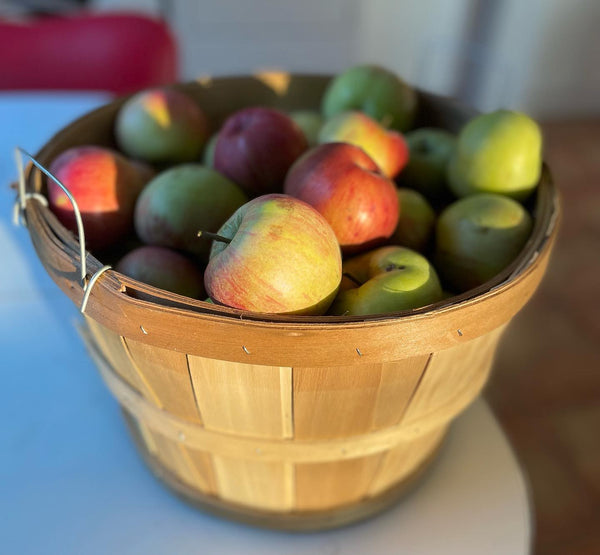 Northern Spy Apple(Spring 2027)
From $39.99
-
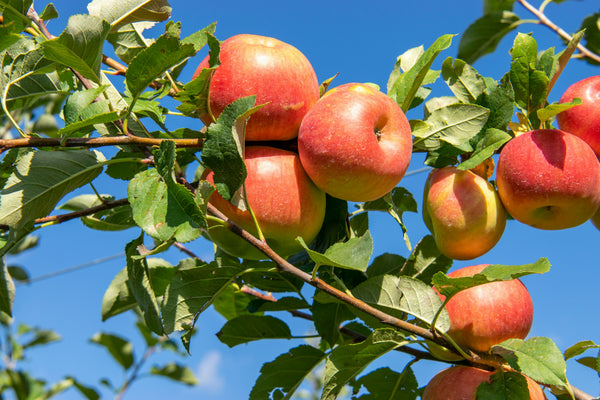 Oriole Apple(Spring 2027)
From $49.99
-
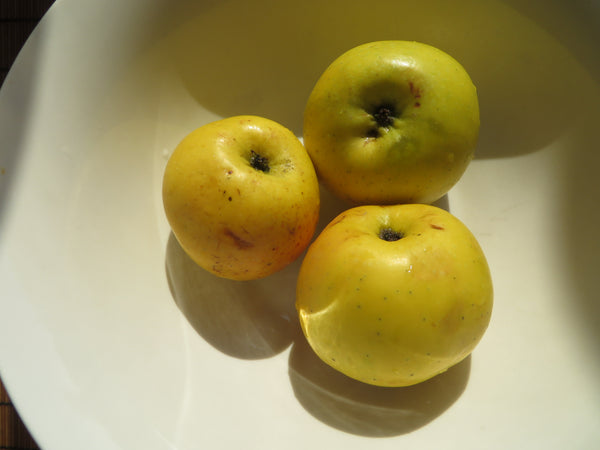 Reinette Simirenko Apple(Spring 2027)
From $44.99
-
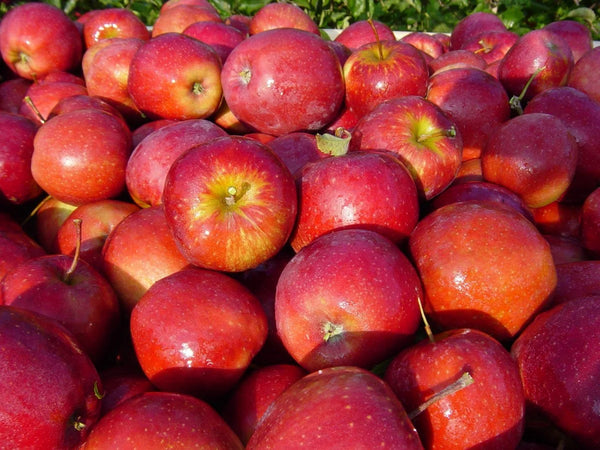 Spencer Apple(Spring 2027)
From $49.99
-
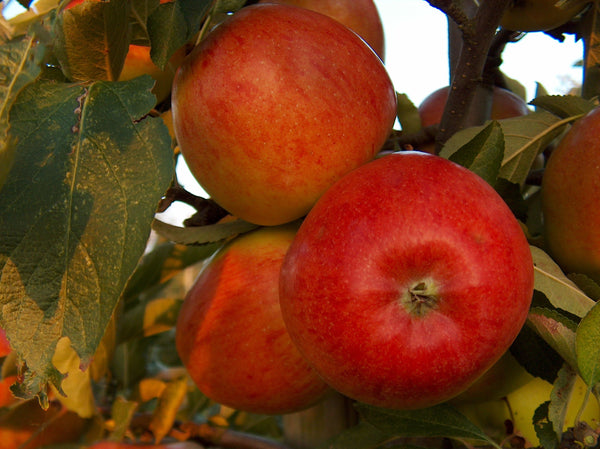 Sweet Sixteen Apple(Spring 2027)
From $44.99
-
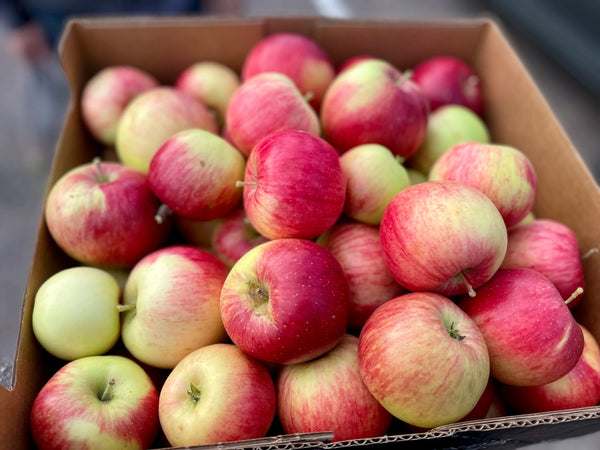 Wealthy Apple(Spring 2027)
From $59.99
-
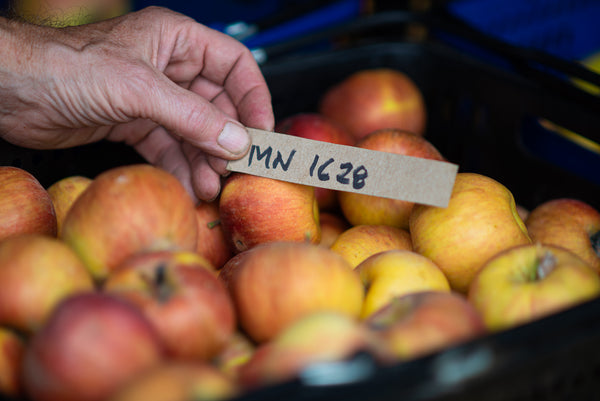 MN 1628 Apple(Spring 2027)
$89.99
-
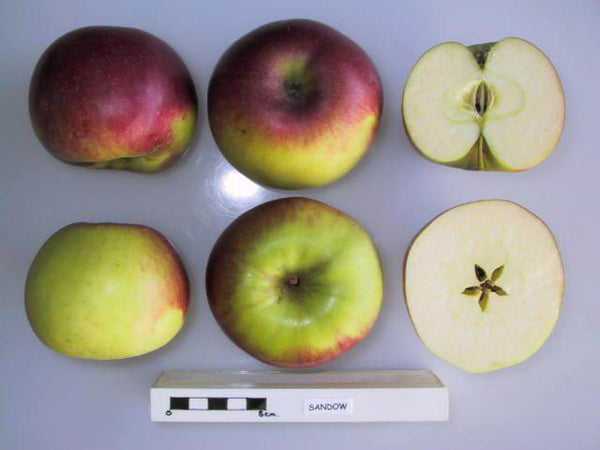 Sandow Apple(Spring 2027)
From $44.99