
Skip to product information


Beurré Giffard Pear (Spring 2027)
$84.99
Reliable shipping
Flexible returns
Pollination
Partly self-fertile
Bloom group
3 of 7 (Early-Mid)
Ripening
Will it finish before your first hard freeze?
Check it on the Ripening Map (opens in a new tab)
Disease resistanceNo strong resistance
- 2 Fire blight : Susceptible, 2 of 5
- 2 Pear scab : Susceptible, 2 of 5
Scored 1 to 5. Higher resists better, and ? means no published data yet.
See it on our pear disease chart (opens in a new tab)At a glance: Beurré Giffard Pear is a pear tree rated hardy to zone 4 in our ratings (winters to -30°F), partially self-fertile, so a second variety nearby makes crops more dependable (bloom group 3 of 7, early-mid for a European pear), and it ripens about Aug 9 to Aug 21 in Missoula (our Missoula estimate).
| Hardy to | Zone 4 to 8. A bare number means the whole of zone 4, colder half included (winters to -30°F). Find your zone with our cold hardiness calculator. |
|---|---|
| Chill hours | About 800 hours (600 to 1,000). Our estimate. No published figure exists for this variety yet. Montana winters give it plenty. In milder climates, make sure your winters average at least this much. Check your chill hours or see our sources. |
| Pollination | Partially Self-Fertile. Bloom group 3 of 7 (early-mid), mid spring here. Beurre Giffard is described as somewhat self-fertile, but plant a partner for real crops. Summercrisp blooms at the same time and is an excellent pollenizer for it. Nearby varieties that can boost the crop: Summercrisp Pear, D'Anjou Pear, Stuttgarter Gaishirtle Pear, Ure Pear and 25 more. Pear Pollination Map. |
| Ripens | About Aug 9 to Aug 21 in Missoula (a Missoula estimate from published sources). Real years swing about a week either way. See the date for your town. |
| Rootstock and size | OHxF 97: full size, about 18 to 25 ft tall unpruned. Vigorous, hardy and well anchored. Our rootstock guide. |
| Good for | Fresh eating (8/10), canning and freezing (8/10). Scores are our own 1 to 10 ratings; 8 and up makes our Best Of lists. |
| Deer | Sometimes damaged by deer. |
| What you get | Bare root, 5-6 ft. Shipped or picked up in Missoula in spring, roots wrapped in moist sawdust. Guaranteed to bud out. |
Overview
Beurré Giffard is a classic early-season European pear known for its elegant tree form, precocity, and excellent dessert quality. We became aware of it when friend and fellow fruit growers Hal Barkdull had proclaimed it "the best pear I've ever tried and I hadn't even liked pears until I tried this one."
It does well in moderately cold climates (although key word is moderately. Please read our notes on its hardiness at the bottom).
Tree Characteristics
According to Bob Purvis:
“Tree has reddish new growth, willowy growth habit, precocious in bearing, blossoms with Summercrisp.
Pair it with other early blooming pears (see our pear pollination chart).
Fruit Description
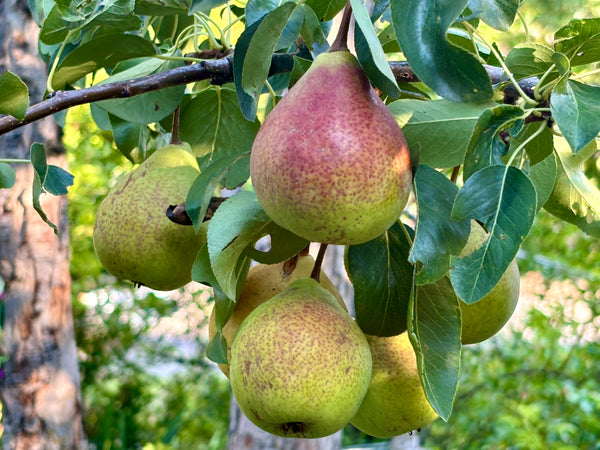
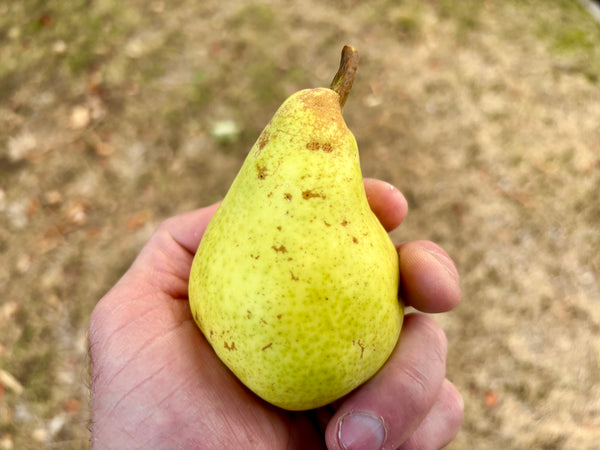
“Fruits are medium sized, somewhat pyriform, good tasting even when slightly unripe, sweet with vinous flavor notes, but keep only a month or two at best.”
Season & Use
“One of the best of the summer pears, grown commercially in southern Quebec.”
With its early ripening window and delicate flavor, Beurré Giffard is a top-tier fresh eating summer pear and can also be used for short-term storage (1–2 months). Keeps better than other summer pears such as Summercrisp.
Hardiness
Maybe one of the biggest demerits of Beurré Giffard is that the tree is not hardy below –30°F. Some areas in Montana have not hit -30°F or below since the 80's. This includes warmer microclimates in the following areas: Missoula, Flathead Lake area, Paradise, Florence/Lolo, and perhaps some other areas because this list is not exhaustive. Make sure the tree is protected and out of the frost/up on a bench.
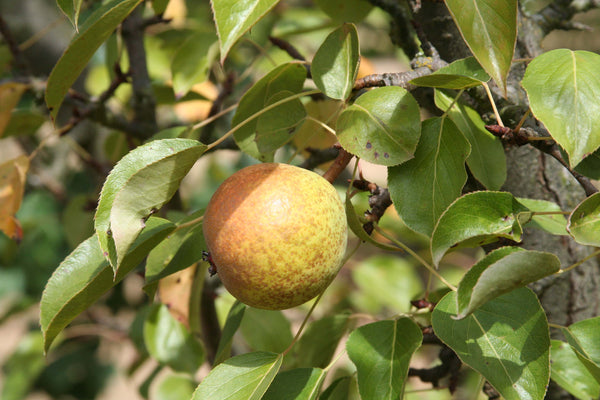
Photos: “Beurre Giffard pear fruit, PI 541144 (pyr0077.002.fruit.2006b)” by USDA-ARS National Plant Germplasm System, National Clonal Germplasm Repository, Corvallis, Oregon, via USDA GRIN, public domain; “Beurre Giffard pear fruit, PI 541144 (pyr0077.002.fruit.2006a)” by USDA-ARS National Plant Germplasm System, National Clonal Germplasm Repository, Corvallis, Oregon, via USDA GRIN, public domain; “Angers - Terra Botanica en automne 155” by Fab5669, via Wikimedia Commons, licensed CC0.
Questions we get about Beurré Giffard Pear
Does Beurré Giffard Pear need a pollenizer?
It helps. Beurré Giffard Pear is partially self-fertile, so it can set some fruit alone, but a second variety nearby makes crops more dependable. Beurre Giffard is described as somewhat self-fertile, but plant a partner for real crops. Summercrisp blooms at the same time and is an excellent pollenizer for it. Partners we carry include Summercrisp Pear, D'Anjou Pear, Stuttgarter Gaishirtle Pear.
How cold hardy is Beurré Giffard Pear?
We rate Beurré Giffard Pear hardy to zone 4, which means winters down to about -30°F. Our ratings come from real winters at our two Montana sites and from trusted growers across the North, not from a catalog average.
How many chill hours does Beurré Giffard Pear need?
About 800 hours of winter chill (we count hours at or below 45°F), likely somewhere between 600 and 1,000. Nobody has published a chill figure for it, so that's our estimate from its relatives and origin. Our chill hours guide has a calculator for your winters, and our research page lists the sources.
When does Beurré Giffard Pear ripen?
About Aug 9 to Aug 21 in Missoula, Montana (an estimate built from published sources and our climate). Warmer places run earlier and cooler places later; our ripening map converts the date to your town.
How big does Beurré Giffard Pear get?
We graft Beurré Giffard Pear onto OHxF 97 (full size), which makes a tree roughly 18 to 25 ft tall if you never prune it.
What is Beurré Giffard Pear good for?
Our top use scores for Beurré Giffard Pear are fresh eating (8/10), canning and freezing (8/10). Anything scored 8 or higher makes our Best Of lists.
Is Beurré Giffard Pear disease resistant?
No. It's prone to fire blight and pear scab. Our pear disease resistance chart has every rating, the notes and the sources.
Will deer eat Beurré Giffard Pear?
Sometimes. Deer browse Beurré Giffard Pear now and then, so protect young plants where deer pressure is high.
Juice data
| SG (Brix) | Acid g/L | Tannin g/L | pH |
|---|---|---|---|
| 1.050 (12.5) E | 3.0 E | 0.3 E | not published |
Letters show how solid each number is: M measured, P published but weaker, E our estimate.
No juice test found for this pear; numbers are our estimate.
Run Beurré Giffard Pear through the hard cider calculator to see what it does in a blend.
More Plants Like This
By Zone
Pollination, Bloom & Ripening
Pollination partners
Partners for a bigger Beurré Giffard Pear crop
Beurré Giffard Pear sets some fruit on its own, but a lot more with a partner. Every tree below blooms at the same time and has pollen that works for it.
Bloom group
3 of 7 (Early-Mid)
Pollination
Partly self-fertile
Pollen
Good pollenizer
-
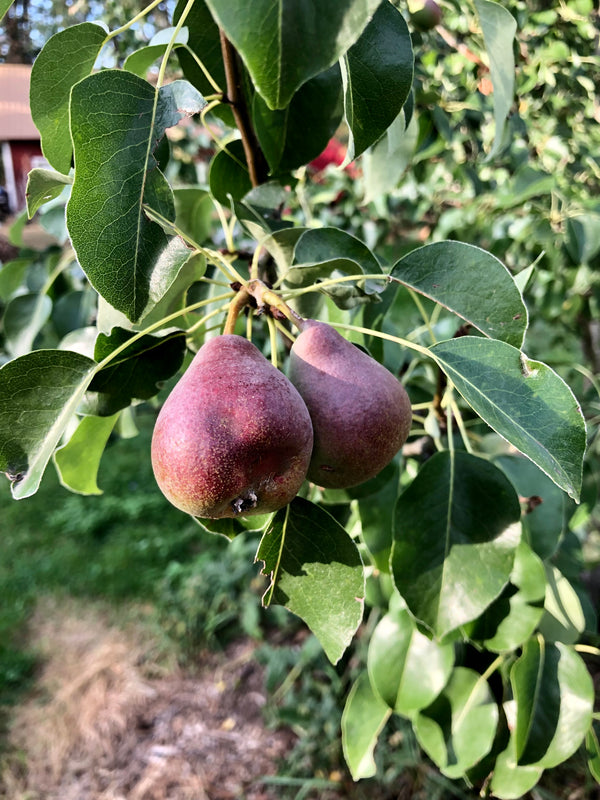
 Summercrisp Pear(Spring 2027)
From $34.99
-
 D'Anjou Pear(Spring 2027)
From $64.99
-
 Stuttgarter Gaishirtle Pear(Spring 2027)
From $49.99
-
 Ure Pear(Spring 2027)
From $49.99
-
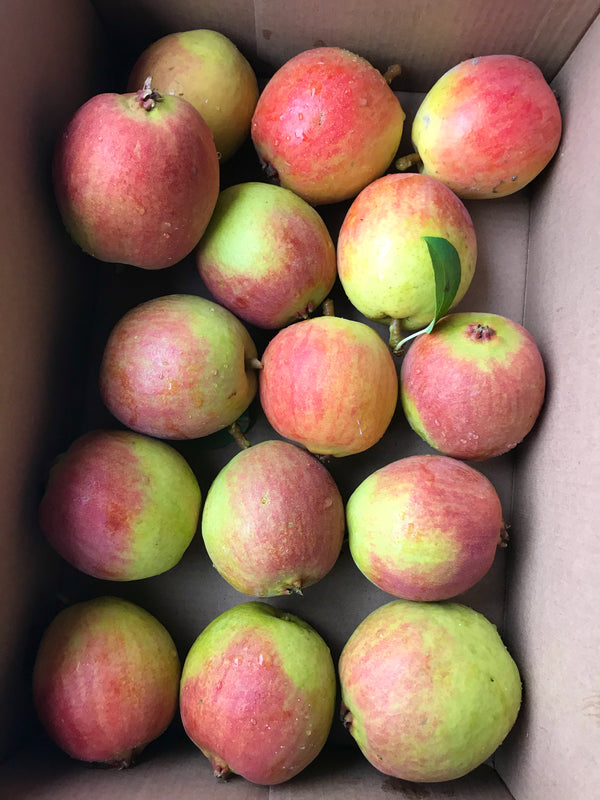 Krazulya Pear(Spring 2027)
From $44.99
-
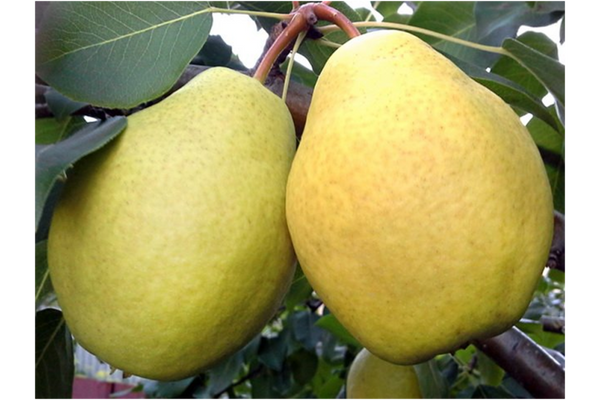 Larinskaya Pear(Spring 2027)
From $44.99
-
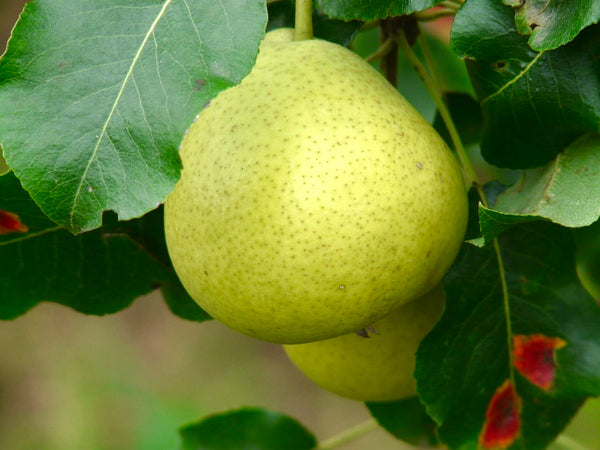 Savignac Pear(Spring 2027)
From $44.99
-
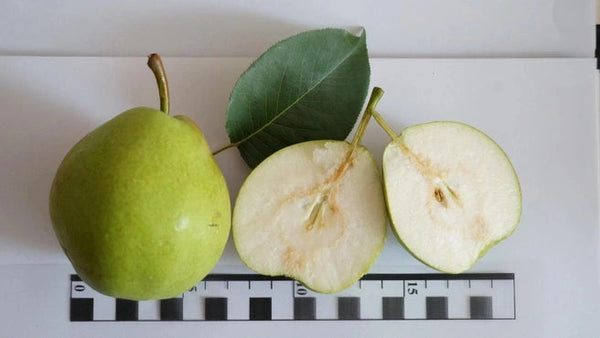 Bolshaya Pear(Spring 2027)
From $34.99
-
 Vekovaya Pear(Spring 2027)
From $49.99
-
 Bartlett Pear(Spring 2027)
From $64.99
-
 Honeysweet Pear(Spring 2027)
$49.99
-
 Seckel Pear(Spring 2027)
From $109.99
