Skip to product information


Superior Plum (Spring 2027)
$59.99
Reliable shipping
Flexible returns
Pollination
Needs a partner
Bloom group
5 of 7 (Mid-Late)
Ripening
Will it finish before your first hard freeze?
Check it on the Ripening Map (opens in a new tab)
Disease resistanceResists 1 of 6
- 3 Bacterial canker : Moderate, 3 of 5
- ? Bacterial spot : Unknown, no published data yet
- 4 Black knot : Resistant, 4 of 5
- 2 Brown rot : Susceptible, 2 of 5
- ? Cytospora canker : Unknown, no published data yet
- ? Plum pocket : Unknown, no published data yet
Scored 1 to 5. Higher resists better, and ? means no published data yet.
See it on our plum disease chart (opens in a new tab)At a glance: Superior Plum is a plum tree rated hardy to zone 3b in our ratings (winters to -35°F), not self-fertile, so it needs a different variety nearby as a pollenizer (bloom group 5 of 7, mid-late for a hybrid or Japanese plum), and it ripens about Sep 7 to Sep 19 in Missoula (our Missoula estimate).
| Hardy to | Zone 3b to 8. The b means the warmer half of zone 3 only (winters to -35°F). Our notes have it taking -38°F. Find your zone with our cold hardiness calculator. |
|---|---|
| Chill hours | About 600 hours (500 to 800). From published figures. Montana winters give it plenty. In milder climates, make sure your winters average at least this much. Check your chill hours or see our sources. |
| Pollination | Needs Cross-Pollination. Bloom group 5 of 7 (mid-late), early spring here. Superior pollenizes most hybrid plums but not La Crescent, and it needs a partner itself such as Toka or a Native American plum. Good partners we carry: Toka Plum, Kaga Plum, Kahinta Plum, South Dakota Plum and 9 more. Plum Pollination Map. |
| Ripens | About Sep 7 to Sep 19 in Missoula (a Missoula estimate from published sources). Real years swing about a week either way. See the date for your town. |
| Rootstock and size | Native Plum: semi-dwarf, about 10 to 15 ft tall unpruned. Suckers, so mow or pull suckers. Prairie Red: semi-dwarf, about 10 to 15 ft tall unpruned. A seed-grown American plum hybrid from the USDA plant materials center in Bismarck; it suckers. Plant 12 to 15 ft apart. Our rootstock guide. |
| Good for | Fresh eating (9/10), jams and jellies (7/10). Scores are our own 1 to 10 ratings; 8 and up makes our Best Of lists. |
| Deer | A deer favorite. Fence it or cage it. |
| Compare it | Toka vs Superior, side by side on hardiness, pollination, ripening and fruit. |
| Where it came from | Read about the University of Minnesota breeding program and what else came out of it. |
| What you get | Bare root, 3-5 ft or 5-6 ft or 5-7 ft. Shipped or picked up in Missoula in spring, roots wrapped in moist sawdust. Guaranteed to bud out. |
Overview
Superior Plum is a cold-hardy hybrid plum developed specifically to bring improved fruit quality into colder regions where pure Japanese plums often struggle. Remains one of the better-known Japanese–American hybrids for northern plantings.
Origin & History
Superior Plum was bred by University of Minnesota in 1933 from a cross of ‘Burbank’ × ‘Kaga’.
‘Burbank’ is a Japanese plum (Prunus salicina), while Kaga’ is itself an interspecific hybrid derived from Prunus americana × Prunus simonii.
This makes Superior a complex hybrid combining Japanese plum genetics with American plum and Simon plum ancestry. The breeding goal was to capture the fruit quality of Japanese plums while incorporating the cold tolerance and resilience of American plum material. Because of this background, Superior is often broadly described as a Japanese × American hybrid, but its exact pedigree is more accurately represented as:
Burbank × (americana × simonii).
Superior has been planted in colder regions for decades as part of early efforts to expand reliable plum production beyond traditional Japanese plum climates.
Fruit & Uses
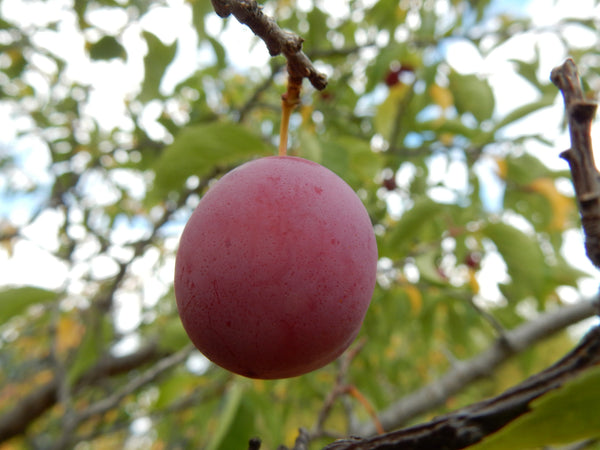
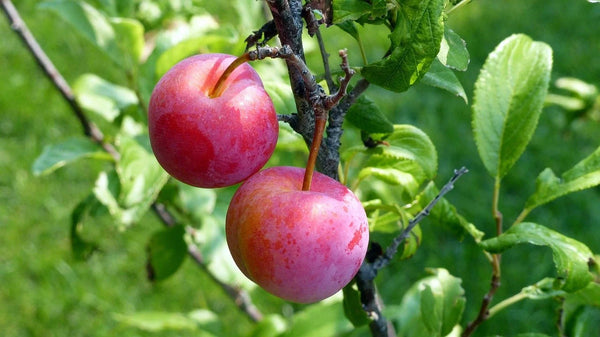
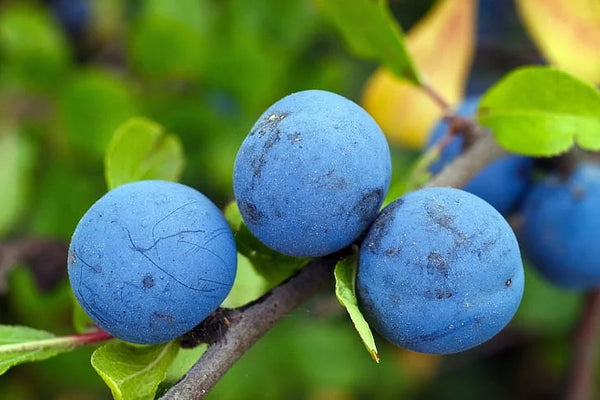
Superior produces red-skinned plums with yellow flesh. The fruit is sweet and suitable for fresh eating, while also working well for preserves, baking, jams, and other kitchen uses. It is generally grown as a dual-purpose plum: enjoyable fresh when fully ripe and practical for processing.
Growth Habit and Spacing
We offer Superior on Native Plum and Prairie Red Plum semi-dwarf rootstock. Although these are both seedling rootstocks, Superior should be expected to mature as a moderately sized tree rather than a full standard tree. Native plum can be more dwarfing at times (given their seedling nature), but from our initial test results, Prairie Red seems to be a more consistently sized semi-dwarf, reaching about 15 ft tall at maturity.
A planting spacing range is about 12–15 feet between trees, depending on pruning intensity and desired canopy size. Wider spacing supports airflow and light penetration; tighter spacing requires more active canopy management.
Pollination
Superior Plum is not self-fertile and requires another plum nearby to act as a pollenizer for reliable fruit set. Plant with other hybrid plums that we offer, including Alderman, Black Ice, Pipestone, Underwood, Gracious, as well Toka (often referred to as a universal pollenizer for the hybrid plums). Native and Prairie Red plums can also work as a pollenizer for Superior.
Cold hardiness
Often listed as a hardy plum, exact minimum survival temperatures and the most accurate zone ratings are not known yet in Montana, but given that Underwood, Alderman, and Pipestone have all survived -38F in Stevensville, MT, Superior would likely be part of this ilk. Likely a solid zone 3b plum at the minimum, and even possibly 3a with protection/in a good location (out of frost pooling/depression, up on a bunch, good airflow, etc.).
Other Notes
Superior’s value lies in its breeding: it represents an early and successful attempt to merge Japanese plum fruit quality with American plum toughness. This mixed ancestry is what allows it to function in colder regions where many Japanese plums fail.
We are unsure of Superior's disease resistance in Montana, given we have only been growing it for a few years. As with most plums, long-term success depends primarily on site selection, spacing, pruning for airflow, and orchard sanitation to manage common stone-fruit diseases such as bacterial canker and brown rot.
Questions we get about Superior Plum
Does Superior Plum need a pollenizer?
Yes. Superior Plum needs pollen from a different variety that blooms at about the same time. Superior pollenizes most hybrid plums but not La Crescent, and it needs a partner itself such as Toka or a Native American plum. Partners we carry include Toka Plum, Kaga Plum, Kahinta Plum.
How cold hardy is Superior Plum?
We rate Superior Plum hardy to zone 3b, which means winters down to about -35°F. Our notes have it taking -38°F. Our ratings come from real winters at our two Montana sites and from trusted growers across the North, not from a catalog average.
How many chill hours does Superior Plum need?
About 600 hours of winter chill (we count hours at or below 45°F), likely somewhere between 500 and 800. That comes from published figures for this variety. Nursery figures run 500 to 800 hours, so it fits most cold-winter areas. Toka is a good pollenizer for it. Our chill hours guide has a calculator for your winters, and our research page lists the sources.
When does Superior Plum ripen?
About Sep 7 to Sep 19 in Missoula, Montana (an estimate built from published sources and our climate). Warmer places run earlier and cooler places later; our ripening map converts the date to your town.
How big does Superior Plum get?
We graft Superior Plum onto Native Plum (semi-dwarf), which makes a tree roughly 10 to 15 ft tall if you never prune it. Some sizes are on Prairie Red. Plant 12 to 15 ft apart.
What is Superior Plum good for?
Our top use scores for Superior Plum are fresh eating (9/10), jams and jellies (7/10). Anything scored 8 or higher makes our Best Of lists.
Is Superior Plum disease resistant?
For some diseases, yes. It's resistant to black knot. It holds up moderately well against bacterial canker. It's prone to brown rot. Nobody has published solid data on it for bacterial spot, cytospora canker and plum pocket yet, so we list those as unknown. Our plum disease resistance chart has every rating, the notes and the sources.
Will deer eat Superior Plum?
Yes, deer love it. Protect Superior Plum with a fence or a cage, especially while it is young.
More Plants Like This
Read More
Best For
Pollination, Bloom & Ripening
Disease Resistance
Pollination partners
Trees that will pollenize Superior Plum
Superior Plum needs a different hybrid or Japanese plum nearby to set fruit. Every tree below blooms at the same time and has pollen that works for it. Plant partners within about 100 feet.
Bloom group
5 of 7 (Mid-Late)
Pollination
Needs a partner
Pollen
Good pollenizer
-
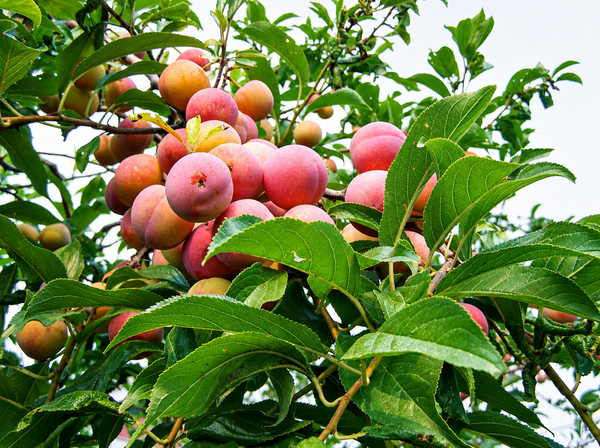 Toka Plum(Spring 2027)
From $49.99
-
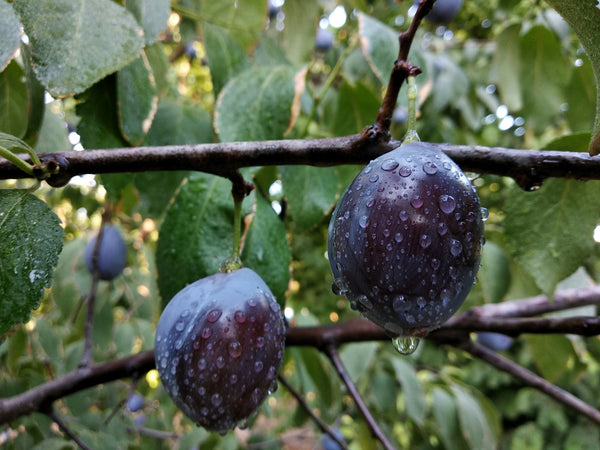 Kaga Plum(Spring 2027)
From $54.99
-
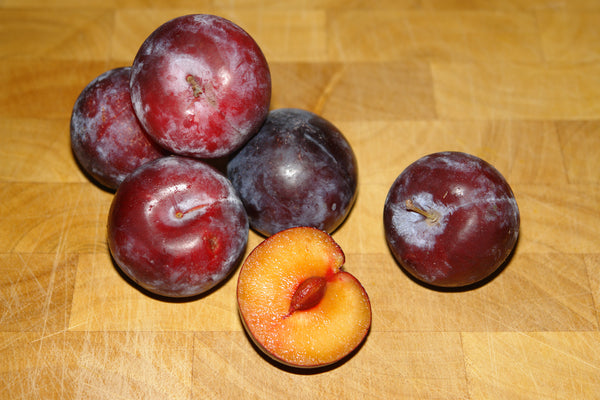 Kahinta Plum(Spring 2027)
$79.99
-
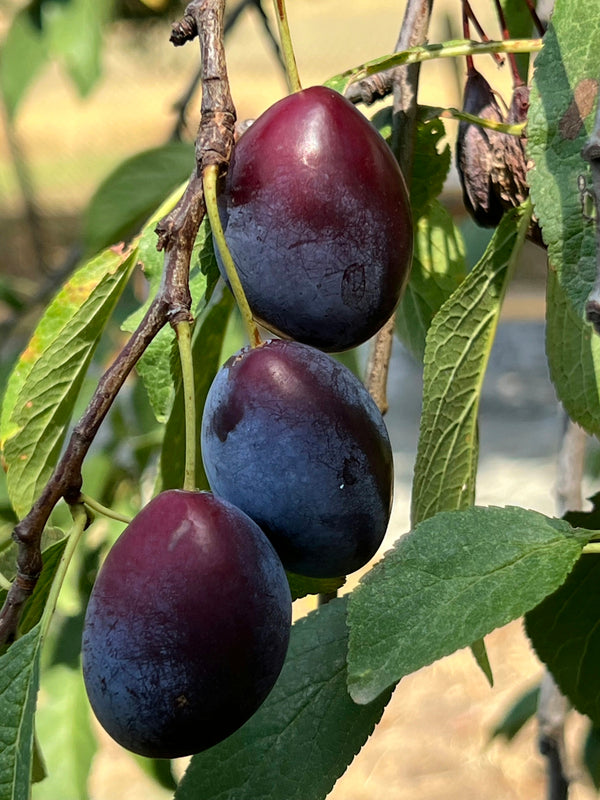 Black Ice Plum(Spring 2027)
From $44.99
-
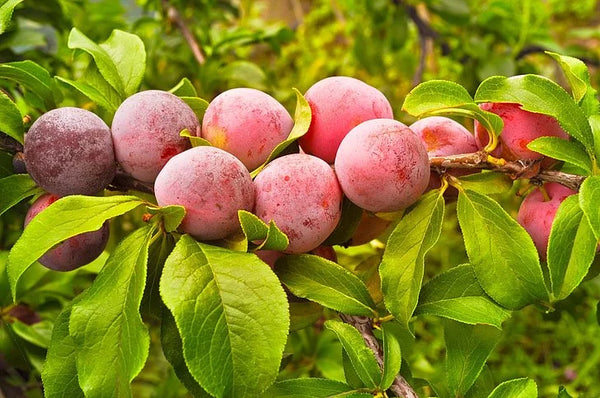 Pipestone Plum(Spring 2027)
From $59.99
-
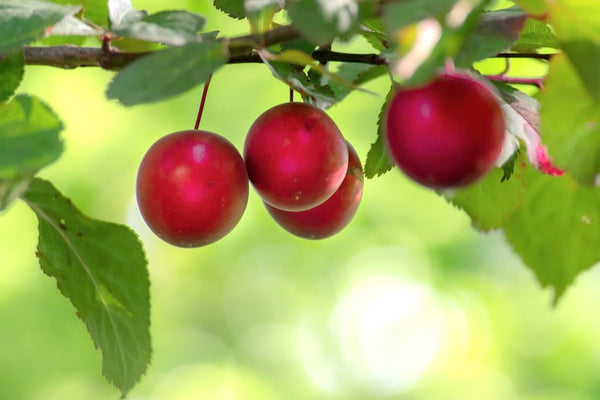 Gracious Plum(Spring 2027)
From $59.99
-
 Benson's Gem Plum(Spring 2027)
From $44.99